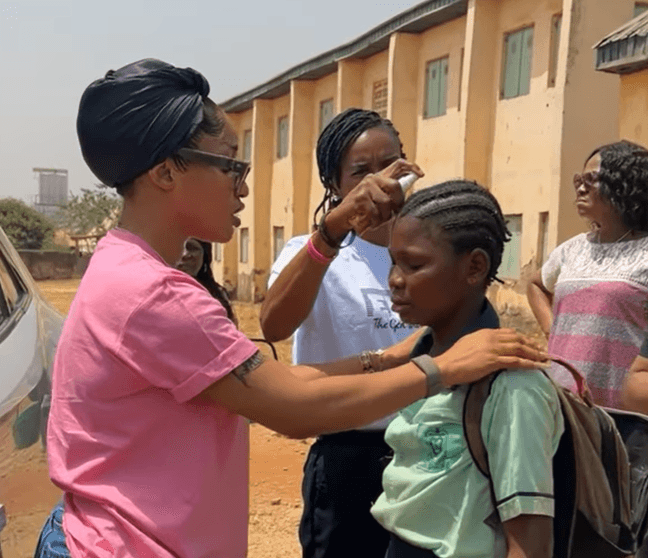
A video circulating online shows Nollywood actress Tonto Dikeh holding a deliverance prayer for a schoolgirl during an evangelism outreach. The footage captures Dikeh, dressed in casual attire, praying fervently over the young student in a public setting. This public spiritual intervention represents a significant moment in Dikeh's public ministry activities.
Deliverance prayers are a practice in some Pentecostal and Charismatic Christian traditions aimed at freeing individuals from perceived spiritual oppression or demonic influence. The act involves intense prayer, often with laying on of hands and commands issued in the name of Jesus. Performing such a ritual for a schoolgirl in a non-church setting draws attention to the blending of evangelism with direct spiritual warfare in public spaces.
Tonto Dikeh's involvement marks a continued evolution in her public persona from a controversial film star to a vocal Christian evangelist. She has increasingly used her social media platforms and public appearances to share her faith and testify about personal transformation. This outreach event appears to be a practical extension of that ministry, moving beyond testimony to active spiritual work among communities.
The choice of a schoolgirl as the subject of the prayer raises questions about the context and consent involved in such public ministrations. While the video shows the prayer in progress, it provides no information about how the girl came to be part of the outreach or what specific concerns prompted the deliverance session. The public nature of the event contrasts with more private pastoral counseling typically offered in religious settings.
Evangelism outreach programs are common among Nigerian Christian groups, often involving street preaching, worship, and prayer teams engaging with passersby. These events aim to spread the Christian message and offer immediate spiritual services like healing or deliverance. Dikeh's participation signals her integration into these established evangelical practices, leveraging her celebrity status to draw attention to the cause.
The video's circulation online has sparked discussion among Nigerian social media users, with reactions ranging from support to skepticism. Some commentators applaud Dikeh for using her platform for evangelism, while others question the appropriateness of public deliverance sessions, especially involving minors. The debate reflects broader conversations in Nigeria about the boundaries between celebrity influence, religious practice, and personal privacy.
This incident contributes to the ongoing narrative of Nigerian entertainers transitioning into ministry, a pattern seen with several other actors and musicians in recent years. These career shifts often involve public declarations of faith, adoption of ministerial titles, and engagement in church planting or evangelistic work. Dikeh's very public deliverance prayer solidifies her position within this trend of celebrity-turned-minister figures.
The video serves as a documented instance of Tonto Dikeh's current religious activism, providing tangible evidence of her ministerial methods beyond social media posts. As she continues this evangelism work, further public appearances and possibly organized outreach events are likely to follow, shaping her new identity beyond the Nollywood screen.