The ruling All Progressives Congress has expanded its majority in Nigeria's Senate to 80 members, a significant consolidation of legislative power. This increase follows the defection of Ipalibo Banigo, the lawmaker representing Rivers West Senatorial District, from the opposition Peoples Democratic Party. The move shifts the chamber's balance further in favor of the APC, providing a stronger platform for the executive's legislative agenda.
Banigo's departure is the latest blow to a PDP reeling from internal and legal challenges. The Court of Appeal has upheld rulings that invalidated the party's national convention held in Ibadan in November 2025. This legal setback throws the party's leadership structure into uncertainty and complicates its ability to organize effectively against the APC. Former Senate President Bukola Saraki has appealed to PDP leaders to resolve the litigations and hold a fresh convention to establish legitimate leadership.
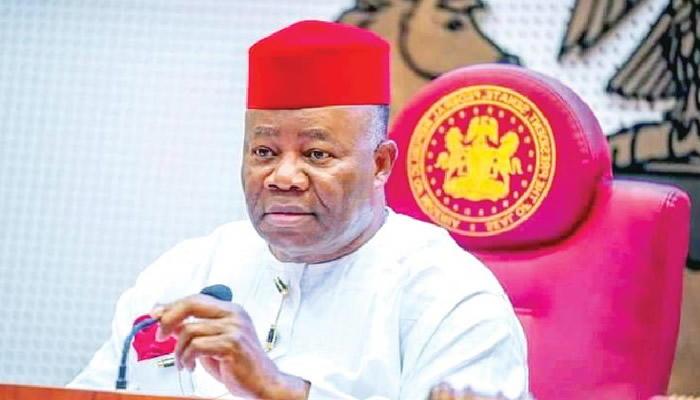
Against this backdrop of political realignment, Senate President Godswill Akpabio framed the institution's role in stark terms. 'The Senate is not merely a theatre of debate; it is a workshop of solutions,' he stated, emphasizing a focus on governance over political spectacle. He contrasted this with the chaotic nature of public discourse, adding that 'social media magnifies the noise of the moment.' His comments position the Senate as a deliberate counterpoint to the rapid, often unfiltered, debates occurring online.
Akpabio directly addressed the relationship between the public and their government. He has asked citizens to channel all concerns through their elected representatives. This directive underscores a traditional, formal pathway for civic engagement, prioritizing structured dialogue within legislative frameworks. It implicitly questions the efficacy of mass, decentralized social media campaigns in influencing concrete policy outcomes.
The political maneuvering occurs alongside a moment of solemnity for the Senate with the passing of Senator Barinada Mpigi. His death temporarily pauses partisan hostilities, reminding the chamber of its shared humanity and service. Such events often force a reflection on the purpose of political service beyond party affiliation, though they rarely alter the fundamental dynamics of power for long.
In practice, an 80-seat APC majority represents a commanding position. It significantly eases the passage of appropriation bills, constitutional amendments requiring a two-thirds majority, and the confirmation of executive nominees. The opposition's weakened state reduces its capacity to scrutinize legislation or mount credible challenges to government proposals on the Senate floor. This legislative environment favors policy execution but risks diminishing robust oversight.
The immediate future for Nigerian politics hinges on the PDP's next moves. The party must navigate the court's invalidation of its convention, a process that will consume resources and attention. A successful fresh convention is critical to halting further defections and presenting a united front. The coming months will test whether the opposition can reorganize or if the APC's consolidation becomes a prolonged era of one-party dominance in the legislature.
Attention now turns to the practical implications of this new balance of power. Observers will watch for the Senate's legislative calendar, particularly any contentious bills the APC now has the numbers to pass without compromise. The next major test will be the 2026 budget process, where the government's spending priorities will face a chamber where the ruling party holds overwhelming numerical advantage.