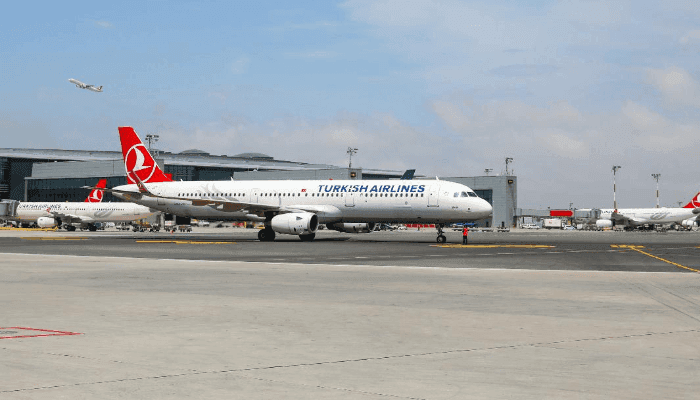
On Tuesday, March 10, 2026, aviation workers abruptly halted all Turkish Airlines operations at Lagos's Murtala Muhammed International Airport. The action left hundreds of passengers scheduled to travel with the carrier stranded, with no immediate resolution in sight. While specific worker grievances were not detailed in official statements, the shutdown underscores significant labor tensions within Nigeria's critical aviation sector.
This domestic disruption unfolds against a backdrop of intense global economic volatility. The Wall Street Journal reported Tuesday that the International Energy Agency (IEA) has proposed its largest-ever release of oil reserves—a direct attempt to counter soaring crude prices driven by the ongoing US-Israeli war with Iran. Following the proposal, global oil prices stabilized, offering brief respite from recent spikes.
Further illustrating regional instability, Saudi Arabia's defence ministry stated on Wednesday that it intercepted two drones heading towards an oil field in the country's southeast. Such attacks on energy infrastructure have become a recurring threat, fueling market anxieties and supply concerns. The persistent risk to Middle Eastern oil fields maintains upward pressure on global energy costs, which ripple through economies worldwide.
In response to mounting economic consequences, G7 leaders are scheduled to meet by video conference later Wednesday. Their agenda focuses specifically on the war's fallout, with the 'energy situation' cited as a primary concern. Separately, European Central Bank chief Christine Lagarde pledged that 'everything necessary' will be done to keep inflation in check during the conflict, signaling a coordinated but cautious international monetary response.
Back in Nigeria, the aviation shutdown is not the only sign of domestic strain. Resident doctors at the University College Hospital in Ibadan have also raised concerns about working conditions, suggesting broader economic pressures within the country's essential services. As global energy markets tremble and local labor actions disrupt travel, Nigeria faces a complex moment of internal and external challenges.