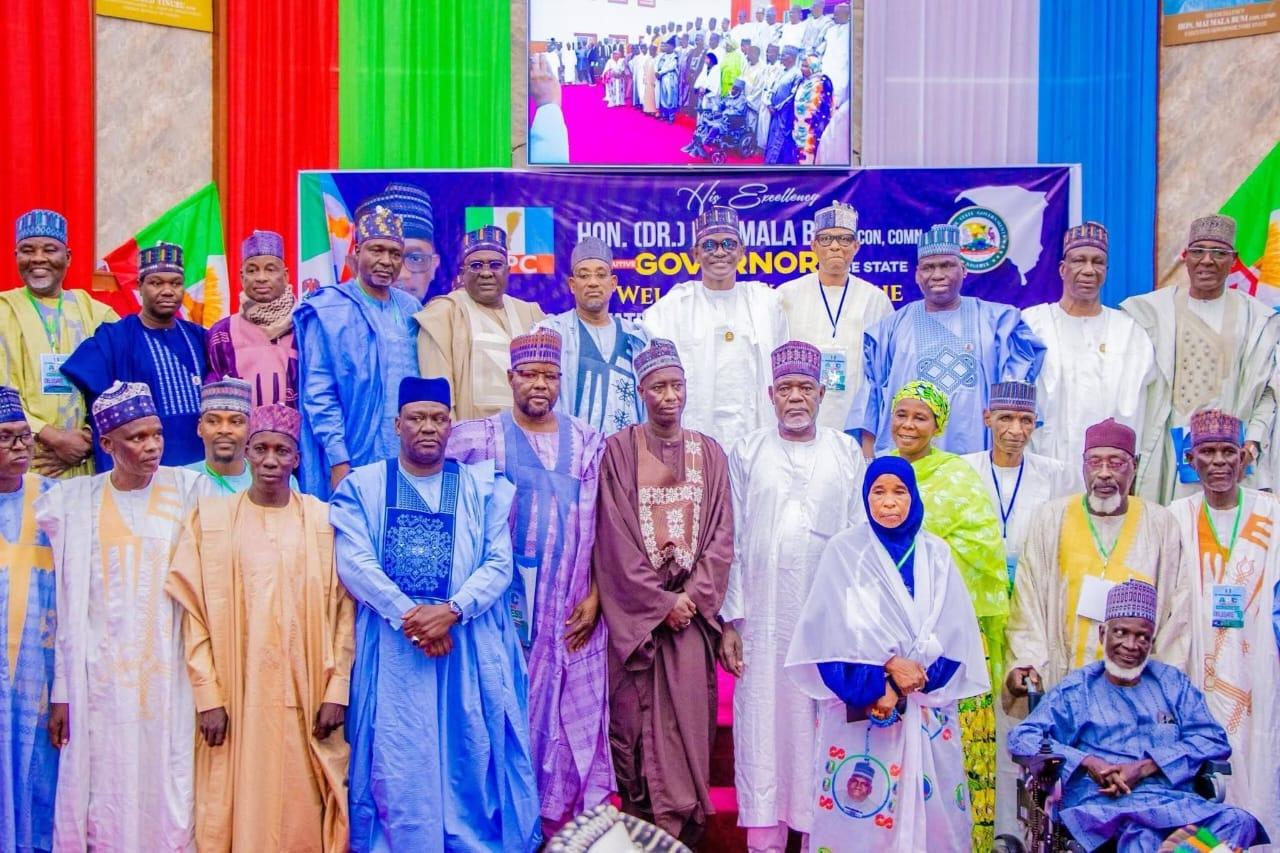
Governor Mai Mala Buni of Yobe State has made a significant political declaration, stating he will never betray the trust of his predecessor, former Governor Ibrahim Gaidam, and the people of the state. This statement was made during a congress held at the Banquet Hall of the Government House in Damaturu, the state capital. The governor's vow underscores the importance of political continuity and loyalty within the state's leadership, a principle that resonates deeply in Nigeria's political landscape where transitions can often be contentious. This commitment comes as the ruling party prepares for its national convention, scheduled for March 27–28, 2026, in Abuja, an event that will shape the nation's political future.
In a separate but equally significant development, Nigeria's economic outlook has received a substantial boost. The nation's Business Confidence Index (BCI) soared to a record 117.2 points in February 2026, a sharp increase from 105.8 points recorded in January. This surge indicates a growing optimism among Nigerian businesses about the economic environment and future prospects. The index's rise is a crucial indicator for policymakers and investors, suggesting that recent economic measures may be gaining traction and fostering a more favorable climate for enterprise and investment across the country.
Breaking down the sectors, the non-manufacturing component of the index showed the most robust performance, climbing to 128.9 points. The manufacturing sector also saw significant improvement, reaching 121.1 points, which points to renewed vigor in industrial production. Furthermore, the services sector climbed to 109.2 points, while trade rebounded robustly to 108.7 points. This broad-based growth across multiple sectors suggests that the improved business sentiment is not isolated but is a widespread phenomenon affecting various facets of the Nigerian economy, from production to services and commerce.
On the legal front, a high-profile case has taken a new turn as the Minister of Justice and Attorney General of the Federation, Lateef Fagbemi, has personally taken over the prosecution of his immediate predecessor, Abubakar Malami. Malami faces serious charges of terrorism and illegal firearms possession, which were brought against him by the Department of the State Service (DSS). This development is notable as it involves a sitting minister prosecuting a former holder of the same office, highlighting the gravity of the allegations and the complexities of Nigeria's justice system when dealing with former high-ranking officials.
The court had previously, on February 27, admitted Malami and his son, Abdulaziz, to bail set at ₦200 million, with two sureties required. Following this, Justice Abdulmalik adjourned the matter to March 10 for the commencement of the trial. The substantial bail amount reflects the severity of the charges, which carry significant implications for national security and the rule of law. The public will be watching closely as the trial proceeds, given the prominent status of the accused and the sensitive nature of the terrorism allegations.
In the entertainment world, popular singer Simi's manager, Vincent, has moved to quash swirling rumors about the artist's personal life. Vincent stated that the rumor was based on a fabricated document presented as a divorce petition allegedly filed by her husband, fellow musician Adekunle Gold. The document, dated February 28, 2026, falsely claimed that the couple's marriage had 'irretably broken down.' This incident highlights the challenges public figures face with misinformation and the rapid spread of unverified claims on social media, which can cause unnecessary distress to the individuals involved and their fans.
Turning to the financial markets, the Naira opened at 1,379.05 per US dollar in the official window during Wednesday morning trading sessions in the Nigerian Foreign Exchange Market (NFEM). The Central Bank of Nigeria (CBN) has maintained its closing rate near 1,384.29, which represents a slight depreciation from the February average of 1,364.74. Meanwhile, the CBN has held the Monetary Policy Rate (MPR) steady at 26.50% following its recent 50-basis-point cut, a decision aimed at balancing inflation control with economic growth. These monetary policy and exchange rate dynamics are critical for importers, exporters, and the general cost of living in Nigeria.
Supporting the economic picture, steady crude oil production at 1.46 million barrels per day has helped offset increased demand for imports. This consistent output provides a stable stream of foreign exchange earnings, which is vital for the country's external reserves and its ability to manage the value of the Naira. The combination of robust oil production, cautious monetary policy, and rising business confidence paints a complex but cautiously optimistic picture of Nigeria's economic trajectory as the nation navigates both domestic challenges and global uncertainties.