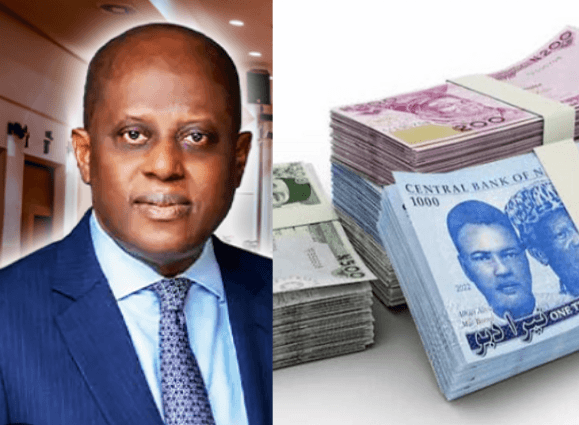
The Central Bank of Nigeria (CBN) has initiated a significant recapitalization program for the nation's banking sector, framing it as a critical accelerator towards the federal government's ambitious target of building a $1 trillion economy. This move represents a strategic pivot, positioning the financial sector's robustness as the primary lever for macroeconomic transformation.
What Recapitalization Really Means
Recapitalization requires commercial banks to substantially increase their capital bases—the core shareholder funds they hold against risks. A stronger capital base does more than just fortify banks against financial shocks; it fundamentally expands their lending capacity. This creates a deeper pool of domestic capital for large-scale, long-term projects that are otherwise difficult to finance.
The Direct Link to a $1 Trillion GDP
Achieving an economy of that scale is not possible without massive, sustained investment in key sectors: stable energy grids, modern transportation networks, scalable manufacturing, and digital infrastructure. The recapitalization drive is designed to create a banking sector capable of providing the "patient capital" for these transformative projects, reducing over-reliance on more volatile foreign investment and expensive external debt.
A Historical Pivot with Modern Ambition
While Nigeria's banking sector has undergone recapitalization cycles before—notably in 2004—this round is distinct. It is explicitly framed not as a reactive stability measure, but as a proactive growth strategy. The direct tethering of banking policy to a specific, quantifiable national economic goal marks a significant evolution in policy coordination between monetary and fiscal authorities.
The Road Ahead for Banks
For the banking industry, this directive will trigger a period of intense activity. Expect a wave of capital raising through equity markets, strategic mergers and acquisitions, and potential consolidation, particularly among smaller institutions. The coming months will reveal which banks are positioned to become the financing powerhouses of Nigeria's next chapter.