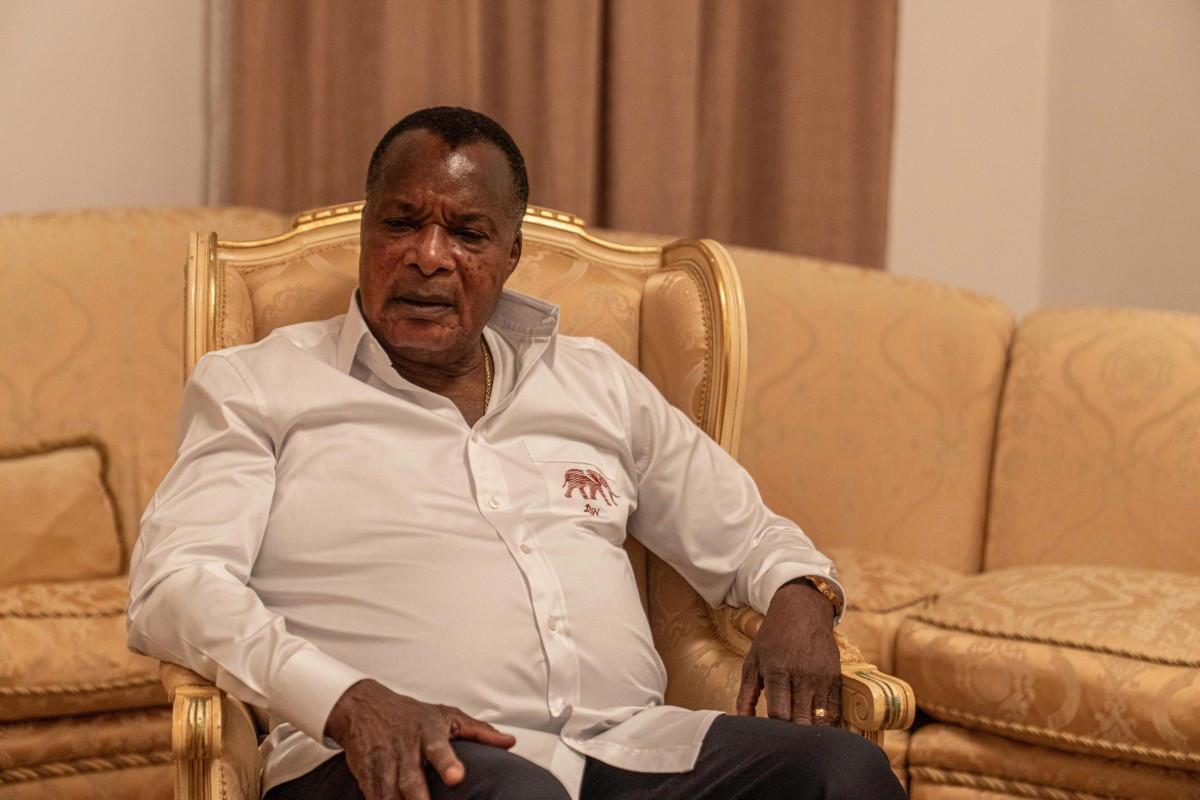
Denis Sassou Nguesso, the 82-year-old president of the Republic of Congo, is set to extend his rule beyond 40 years. This development follows an election where he was the clear frontrunner, having first taken power in 1979. His continued leadership places him among Africa's longest-serving heads of state, a group that includes leaders from Cameroon, Equatorial Guinea, and Uganda. The political landscape in Congo-Brazzaville has been dominated by his party for generations.
Sassou Nguesso's tenure spans two distinct periods: an initial 18-year rule followed by a return to power after a civil war. He first served as president from 1979 until 1992, when the country held multi-party elections. After losing that election, he regained the presidency in 1997 following a brief civil conflict. He has since won successive elections in 2002, 2009, 2016, and now 2026, each time consolidating his control over state institutions.
The president's longevity represents a significant portion of the nation's post-independence history. Congo-Brazzaville gained independence from France in 1960, meaning Sassou Nguesso has led the country for over half of its existence as a sovereign state. His rule has seen the country transition from a Marxist-Leninist state to an oil-dependent economy. This continuity has provided stability but also limited political renewal and generational change in leadership.
In practical terms, another term means continued control over the nation's oil revenues and state apparatus. Congo-Brazzaville is a major oil producer in Central Africa, with crude exports accounting for a substantial share of government revenue and GDP. The presidency commands significant influence over the allocation of these resources, which fund public services, infrastructure, and the security forces. This economic control is a central pillar of the administration's power.
The electoral process itself has faced criticism from opposition groups and some international observers. Previous elections have been disputed, with allegations of irregularities and an uneven playing field. The opposition in Congo-Brazzaville is fragmented and operates under constraints, limiting its ability to mount a cohesive challenge. A victory for the incumbent would likely follow a pattern seen in other long-ruling states in the region, where incumbency advantage is formidable.
For the population of approximately 5.5 million, this political reality shapes daily life and economic prospects. Youth unemployment remains high, and economic diversification beyond oil has been slow. Many citizens have known no other national leader, which affects political expectations and civic engagement. The government points to infrastructure projects and maintained sovereignty as achievements, while critics highlight governance challenges and wealth inequality.
Regionally, this outcome reinforces a trend of extended presidencies in Central Africa. Leaders in neighboring Cameroon and Gabon have also held power for decades, though Gabon experienced a recent military takeover. The continuity in Congo-Brazzaville suggests a stable, if politically static, partner for regional bodies and international investors focused on the oil and mining sectors. It also means foreign policy is likely to remain consistent, with strong ties to France and China.
The next significant milestone will be the official proclamation of results and the subsequent inauguration for a new term. Following that, attention will turn to the composition of the new government and any potential policy announcements for the coming years. The administration will also need to address economic management as the country navigates global oil price fluctuations and debt obligations.