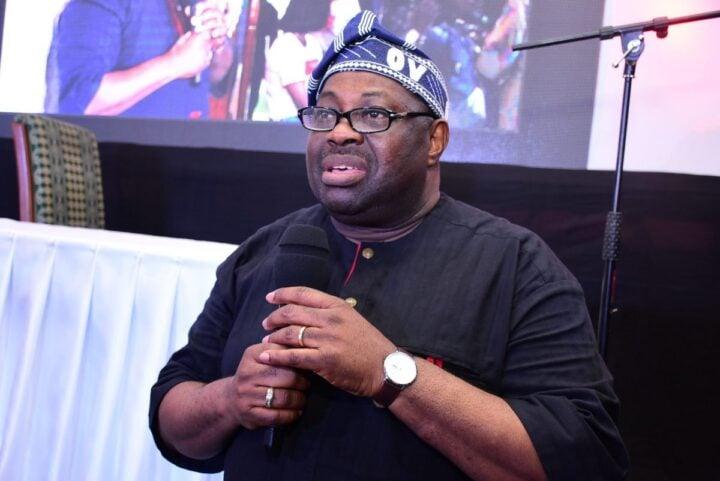
A fresh debate over the political principle of zoning has been ignited, with publisher Dele Momodu asserting that the Nigerian constitution does not recognize the arrangement. Momodu's position, which argues the constitution is supreme and makes no mention of zoning, directly challenges the notion that the presidency must rotate between the country's north and south. This constitutional argument is set against the backdrop of early jostling for the 2027 presidential election, with Momodu adding the opinion that Nigeria has been fair to the southern region since the return to democracy in 1999. The discussion underscores the perennial tension between constitutional provisions and informal political agreements that have shaped the nation's electoral landscape.
In a separate but significant legal development, former Kaduna State governor Nasir Ahmad El-Rufai has explained his refusal to answer questions from the Independent Corrupt Practices Commission (ICPC). El-Rufai, in handwritten statements made under caution on February 19 and 20, 2026, while in ICPC custody, stated his decision to remain silent was deliberate. He based this on his belief that the probe by the anti-graft agency is politically motivated, insisting he would only respond to any allegations in a court of law. This stance represents a high-profile challenge to the investigative powers of the commission and highlights the often-contentious relationship between political figures and anti-corruption bodies.
The former governor may regain his freedom as soon as Thursday, March 5, 2026, if the ICPC fails to file formal charges against him. The anti-graft agency had initially obtained a 14-day detention warrant from a Chief Magistrate Court in Bwari, which is due to lapse on that date. This deadline places significant pressure on the ICPC to either present charges or release El-Rufai, setting the stage for a critical moment in the investigation. The outcome will be closely watched as a test of the agency's ability to build a case against a prominent political figure within a legally constrained timeframe.
Meanwhile, the pursuit of justice for a major tragedy has hit another procedural snag. The trial of nine suspects accused of the 2025 Yelwata massacre in Benue State was again stalled at the Federal High Court in Abuja on Wednesday. The adjournment followed a request by counsel to the 8th and 9th defendants, Y.A. Hassan, delaying proceedings in a case of immense public interest. Justice Joyce Abdulmalik, presiding over the matter, warned of the significant public interest in the case, emphasizing the need for a timely resolution for the victims and the nation.
The court has now adjourned the matter to March 9 and 10, 2026, for what is intended to be a day-to-day trial. The suspects were originally arraigned before Justice Abdulmalik on February 2, facing a 57-count charge brought by the Federal Government for their alleged roles in the killings in Yelwata. Each delay in the trial prolongs the anguish for the families of the victims and tests public confidence in the judicial system's capacity to handle complex cases of mass violence. The scheduled consecutive hearing dates in March represent a renewed, though fragile, commitment to moving the trial forward.
In a more positive political development, Senate President Godswill Akpabio has commended Akwa Ibom State Governor Umo Eno for the peaceful conduct of the state's All Progressives Congress (APC) congress held on Tuesday. Akpabio noted that past congresses in the state were often characterised by factions and mired in controversies, making the recent peaceful event a notable achievement. His commendation highlights the ongoing challenges of internal party democracy within Nigeria's political parties, where congresses and primaries are frequently sites of intense conflict and dispute.
Akpabio provided stark context for his praise, revealing that the team from Abuja sent to conduct the congress had to be led to the State Office of the Department of State Services (DSS) for their safety. He further underscored the volatility often associated with such political exercises by stating, 'Let me tell you that even ward and local government congresses in some states, people lost their lives.' This statement serves as a sobering reminder of the high stakes and sometimes fatal violence that can accompany intra-party competitions for power and influence across Nigeria.
These disparate stories—constitutional debates over zoning, a former governor's legal standoff, a stalled massacre trial, and a rare peaceful party congress—paint a complex picture of Nigeria's current political and judicial climate. They reflect ongoing struggles over the rules of political succession, accountability for corruption and violence, and the basic security required for democratic processes. Together, they form a mosaic of the challenges and occasional progress that define the nation's governance as it moves through 2026.


