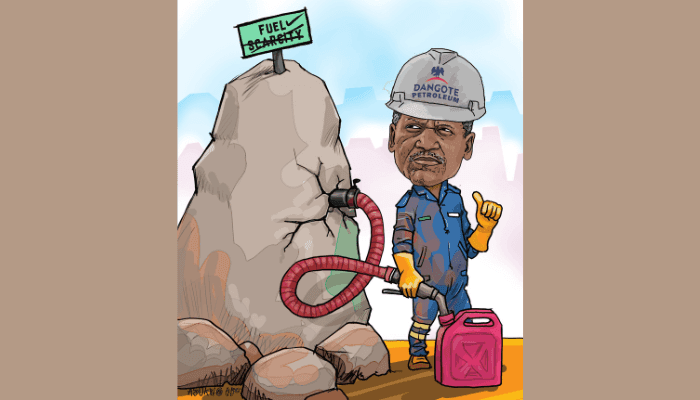
Dangote Refinery has announced a landmark reduction in fuel prices, slashing petrol to N1,075 per litre and diesel to N1,430 per litre. This move immediately resets the cost benchmark for Nigeria's most consumed fuels and represents the most significant price intervention by a domestic producer since the refinery's commissioning.
Immediate Impact on Consumers and Businesses
For the average consumer, the new petrol price of N1,075 per litre translates to tangible savings on daily transportation and household energy costs. The reduction in diesel price to N1,430 per litre offers even more substantial relief for the transport, manufacturing, and power generation sectors, which are heavily reliant on the fuel. In practical terms, a business running a generator on 100 litres of diesel daily would see a significant drop in its daily operational costs, freeing capital for other expenses.
The Driver Behind the Price Cuts
The price cuts are a direct result of Dangote Refinery's ramping up production capacity and its local sourcing of crude oil. This strategy eliminates the costly logistics of imports and shields the operation from foreign exchange volatility. By producing refined products domestically, the refinery bypasses the premiums associated with international shipping, port charges, and intermediaries. This operational efficiency creates the necessary margin to implement these reductions while maintaining commercial viability.
Market Strategy and Broader Economic Context
Analytically, the new pricing places Dangote's petrol at a strategic point, likely undercutting the expected landed cost of imported equivalents. The diesel price of N1,430 represents a more aggressive cut, potentially aimed at capturing market share from smaller importers and encouraging a rapid switch from more expensive alternative power sources. This two-tiered strategy suggests a targeted approach to stimulating different segments of the economy.
In the broader economic context, cheaper diesel is a critical input cost reduction. It can lower logistics expenses, reduce manufacturing overheads, and potentially ease the cost of goods, offering a measure of relief in a challenging economic environment.