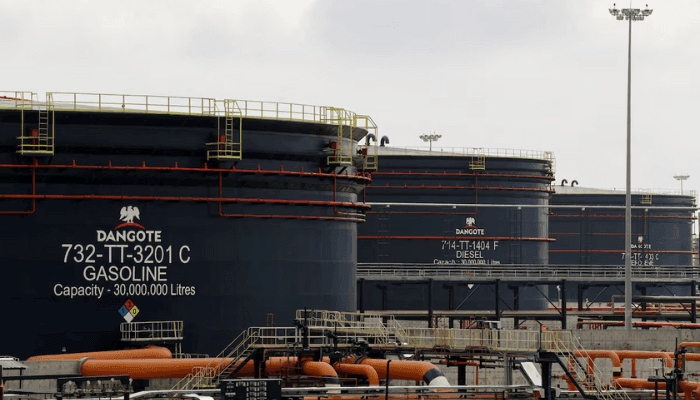
The Dangote Refinery stands as a monumental test case for understanding Nigeria's economy through the lens of corporate survival biology. This framework examines how a major industrial entity adapts, secures resources, and navigates a volatile operating environment to ensure its continued existence. The refinery's sheer scale and strategic importance make its operational health a direct proxy for assessing national economic resilience.
Corporate survival biology analyzes the adaptive traits a business must develop to thrive in a challenging ecosystem. For the Dangote Refinery, these traits include securing consistent crude oil feedstock, managing complex logistics, and navigating foreign exchange volatility. Each of these factors presents a significant hurdle that the corporation must overcome to maintain operations and fulfill its role in the national economy.
The refinery's success is intrinsically linked to Nigeria's long-stated goal of achieving self-sufficiency in petroleum refining. For decades, the country has exported crude oil only to import refined products at a higher cost, a paradox that has drained foreign reserves. The Dangote facility was conceived to break this cycle, positioning itself as a vital organ within the nation's economic body.
However, the path to full operational capacity has been fraught with delays and logistical challenges, mirroring broader infrastructural deficits. These setbacks highlight the gap between ambitious industrial policy and on-the-ground execution. The refinery's ability to overcome these hurdles will be a key indicator of Nigeria's capacity to host and sustain world-class industrial projects.
The project's financial structure and reliance on both local and international financing expose it to global economic pressures. Fluctuations in interest rates, commodity prices, and investor sentiment directly impact its viability. This financial ecosystem surrounding the refinery illustrates how domestic economic ambitions are tethered to international capital markets.
Furthermore, the refinery's relationship with the state-owned Nigerian National Petroleum Corporation (NNPC) and government policy is a critical component of its survival biology. Regulatory decisions, subsidy frameworks, and crude supply agreements can either nourish or stifle the enterprise. This public-private dynamic is central to understanding the project's future trajectory.
Environmental and social considerations also form part of the survival calculus. Community relations, environmental compliance, and the social license to operate are non-negotiable factors in the modern industrial landscape. How the refinery manages these aspects will influence its long-term stability and public perception.
The coming months will be decisive as the refinery aims to ramp up production and begin supplying the domestic market consistently. Its performance will provide concrete data on whether this model of industrial development can catalyze broader economic transformation and reduce Nigeria's crippling dependence on fuel imports.