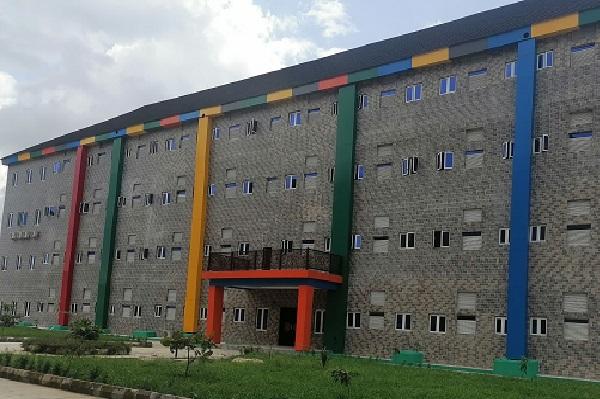
On March 8, 2026, the David Umahi Federal University of Health Sciences (DUFUHS) formally welcomed 1,044 new students into its academic community. The matriculation ceremony served as a significant platform, with university officials explicitly linking the enrollment figures to educational reforms enacted under President Bola Tinubu's administration.
A Public Endorsement of Policy Impact
This direct attribution marks a notable moment in the discourse on Nigeria's higher education direction. By framing its growth as an outcome of the current political agenda, the university provides a concrete case study of how federal initiatives are being implemented at the institutional level. The public acknowledgment underscores a deliberate alignment between national policy goals and local academic execution.
Scaling Capacity in Critical Fields
Matriculating over a thousand students represents a substantial commitment of resources and institutional planning. For DUFUHS, a specialized federal university focusing on health sciences, this intake is particularly significant. It suggests that specific mechanisms within the broader reforms—potentially related to funding, access, or operational guidelines—are facilitating increased enrollment capacity.
Addressing the Healthcare Professional Shortage
The 1,044 newly admitted students are beginning their professional training in medicine, nursing, medical laboratory science, and other critical health disciplines. Their enrollment directly addresses a persistent national need for more healthcare professionals. The specialized focus of DUFUHS means these students are entering programs designed to meet specific, high-demand roles within Nigeria's health sector.
The Road Ahead
This event highlights the tangible, on-the-ground effects of educational policy. The success of these reforms will ultimately be measured not just by enrollment numbers, but by the quality of education, graduation rates, and the integration of these future professionals into a strengthened national healthcare system. The journey for these 1,044 students has just begun, and their progress will be a key metric for assessing the long-term impact of the policies that enabled their admission.