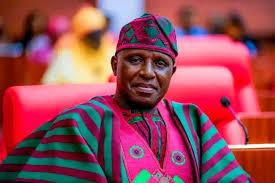
In a significant public intervention, former Senator Dung Gyang has articulated a pointed commentary on three critical issues confronting Nigeria: national security, electoral integrity, and the internal dynamics of the ruling All Progressives Congress (APC). This address provides a valuable lens through which to understand the ongoing political recalibration within the country's governing circles.
The Security Imperative
Gyang's focus on Nigeria's multifaceted security challenges—from rampant banditry and kidnapping in the north to persistent communal conflicts—is not merely observational. As a former legislator with direct constituent engagement, his remarks likely echo the urgent concerns being voiced in private policy discussions. His public airing of the issue applies subtle pressure for a renewed or shifted security strategy, highlighting the gap between official statements and ground-level realities.
Electoral Credibility in the Spotlight
The former senator's decision to address electoral credibility taps directly into a central post-2023 election narrative. With election petitions having consumed the courts and public confidence in the process a recurring debate, Gyang's commentary amplifies calls for substantive reform. It underscores a growing demand for greater transparency and independence within the Independent National Electoral Commission (INEC) to fortify Nigeria's democratic foundations ahead of future cycles.
APC Realignments: Reading the Tea Leaves
Perhaps the most immediately political dimension of Gyang's address is his mention of realignments within the APC. The ruling party, a broad coalition, is perpetually in a state of internal negotiation. Commentary from a seasoned insider sheds light on the factional maneuvers, leadership ambitions, and policy debates that will define the party's direction. This internal churn has direct consequences for governance stability and the APC's cohesion as it looks toward future elections.
Conclusion: A Signal, Not Just a Speech
Dung Gyang's address is more than a list of national issues. It is a signal of the key pressure points within Nigeria's political establishment. By linking security, electoral trust, and party politics, he frames them as interconnected challenges requiring holistic attention. The public nature of this commentary suggests these topics are moving from closed-door debates to open demands, potentially setting the stage for political and policy responses in the near term.