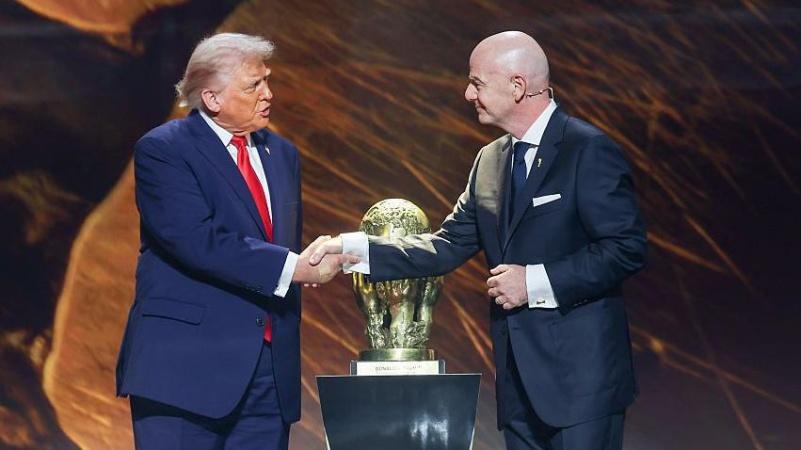
In a move that blurs the line between sports diplomacy and political speculation, FIFA President Gianni Infantino has declared that former US President Donald Trump will welcome the Iranian national team to the 2026 World Cup. The tournament, co-hosted by the United States, Canada, and Mexico, now carries an unexpected geopolitical narrative before any matches have been scheduled.
Infantino's statement reads less like a routine sports update and more like a forward-looking diplomatic assurance. It presupposes that Trump—currently a private citizen and presidential candidate—will hold a position of influence or authority in 2026, a assumption entirely dependent on the outcome of the 2024 US election. This effectively ties a global sporting event to the unpredictable machinery of American politics.
The notion of a warm welcome from Trump stands in stark contrast to his previous administration's posture toward Iran. During his presidency, Trump withdrew the US from the Iran nuclear deal and imposed significant economic sanctions, consistently framing the country as a primary adversary. A hospitable gesture toward Iranian athletes would represent a notable, if confusing, departure from that stance—should Infantino's claim materialize.
For FIFA, the comment reflects the organization's frequent navigation of sport-state intersections. Infantino, whose role often involves balancing geopolitical sensitivities, appears to be attempting preemptive diplomatic bridge-building. However, by naming a specific former leader, the statement feels unusually pointed and risks creating the very friction it seeks to avoid.
Reactions from football associations, host committees, and political commentators are likely to surface in the coming weeks. Whether this is seen as savvy diplomacy or speculative overreach may depend largely on electoral results two years from now—a reminder that in today's climate, even the beautiful game cannot escape the pull of politics.