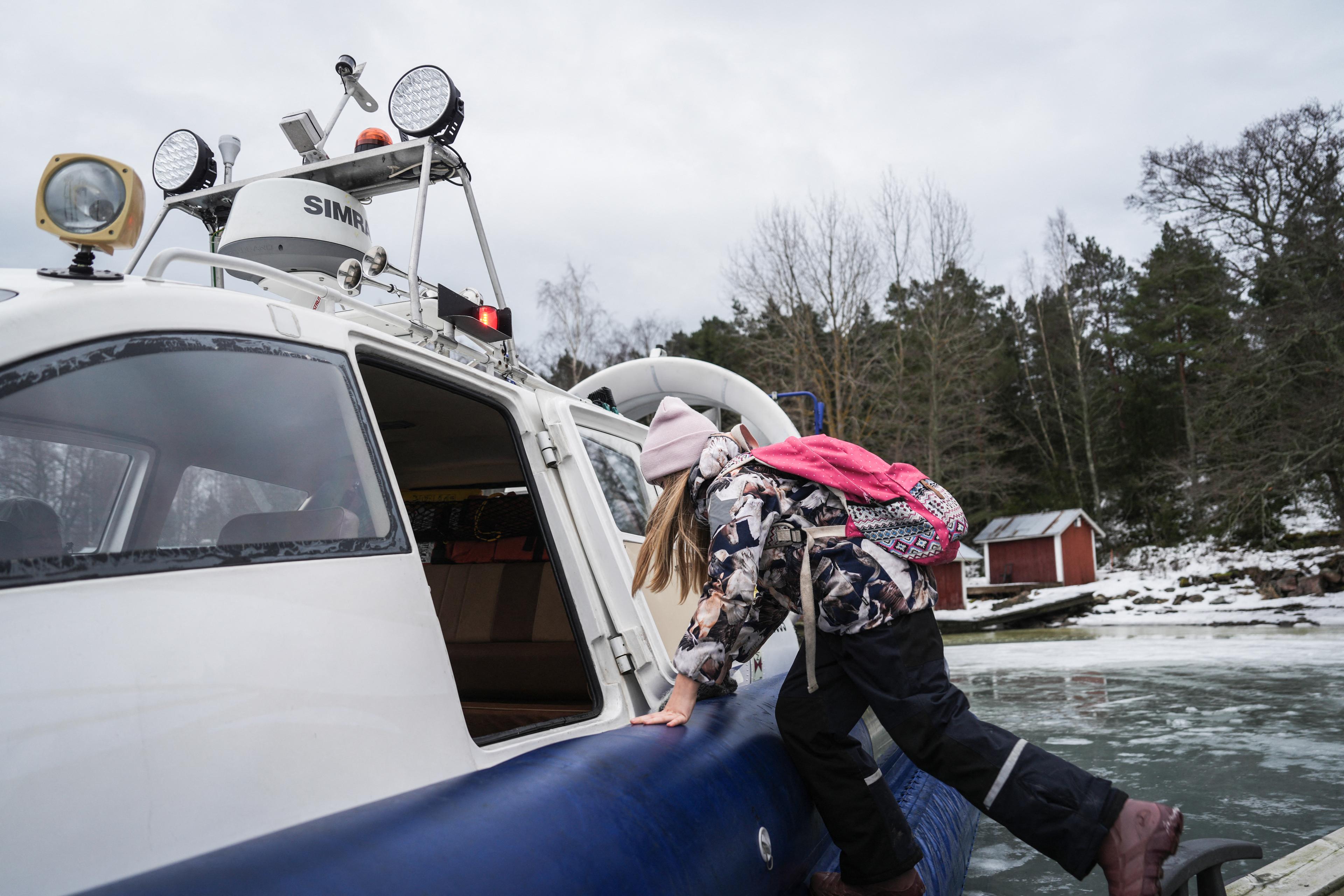
On the scattered islands off Finland's western coast, winter transforms more than just the landscape. It transforms how children get to school. When temperatures plummet and the Baltic Sea freezes into a solid, white plain, regular ferry services become impossible. That's when communities deploy their unique solution: bright yellow hovercrafts that carry students over the ice to their mainland schools.
The Ice Highway
For approximately three months each year, typically from January through March, the hovercraft becomes these islands' educational lifeline. The craft doesn't require open water like traditional ferries, nor does it need cleared roads like winter buses. Instead, it operates on a simple principle: a powerful fan creates an air cushion that lifts the vehicle slightly above the ice, allowing it to glide smoothly across the frozen surface.
A Community's Winter Rhythm
Parents describe the hovercraft's distinctive sound—a loud whirring fan followed by a low rumble—as the new marker of the school day. Children bundle into their snowsuits and gather at wooden docks that now stand surrounded by ice rather than water. They board what looks like an oversized inflatable raft with a cabin, and within minutes, they're skimming across the frozen sea at speeds up to 40 knots.
"You trust the pilots—they know the ice," explains Maria, a mother from a small island community. "But you still listen for the sound of it coming back in the afternoon. That's when you can breathe again."
More Than Transportation
This isn't experimental technology or a novelty. Finland's hovercraft school service has operated for decades as a practical response to geographic necessity. Without it, children would face months of isolation or would need to relocate to mainland boarding houses, separating families throughout the winter.
The service represents Finland's deep commitment to educational equity—ensuring that where a child lives doesn't determine their access to learning. Municipalities fund and operate the hovercrafts as part of their educational infrastructure, with pilots specially trained to assess ice conditions for safety.
Life on the Edge of Winter
For island communities, the hovercraft is more than transportation; it's what keeps social fabric intact during the harshest season. Neighbors share ice condition reports, parents coordinate schedules, and everyone keeps an eye on the weather. When the hovercraft runs, life continues with a semblance of normalcy—home remains home, and school remains accessible.
As climate patterns shift, these communities watch winter ice carefully. Some years bring thicker, longer-lasting ice; others see shorter freezing periods. But for now, each winter morning still brings that distinctive hum across the frozen sea—the sound of education finding a way, no matter what nature puts in its path.