A single remark by a governor and a deepening party rift have ignited conversations about governance and political stability in Nigeria, even as a significant development project offers a counter-narrative of progress.
The 'Receptionist' Remark: A Question of Accessibility
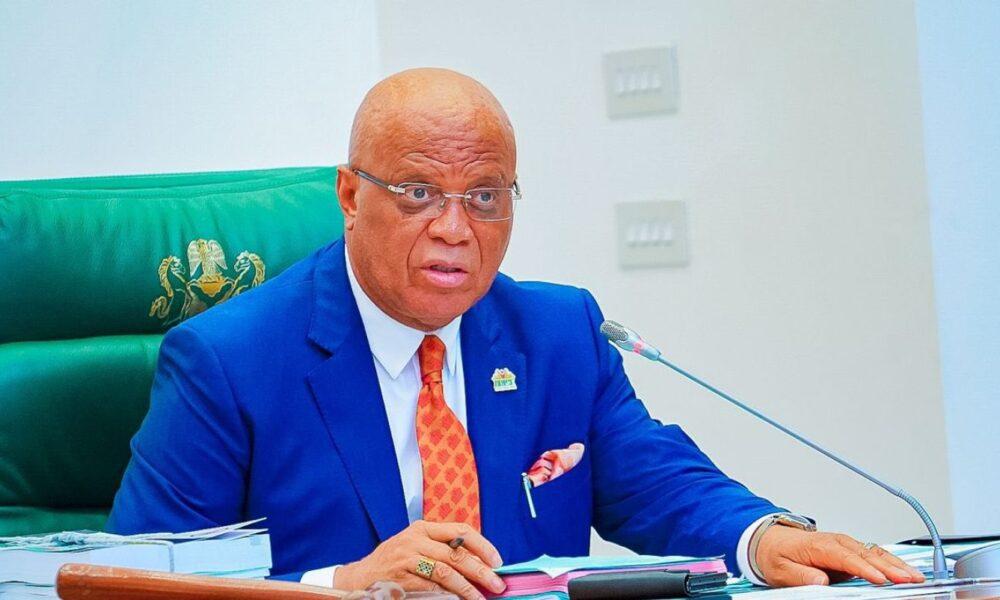
Governor Eno Umo of Akwa Ibom State has stirred public discourse with a pointed statement regarding his role. "I was not a receptionist who should be taking calls from people," he declared. In a political climate where citizens often demand direct access to their leaders, this comment has opened a debate on the boundaries and expectations of public service. Is a governor a frontline responder, or does such accessibility hinder administrative efficiency? The remark, lacking immediate context, has been left for the court of public opinion to interpret.
APC in Crisis: Benue Chapter Splits in Two
Meanwhile, in Benue State, the ruling All Progressives Congress (APC) is grappling with a severe internal crisis. The party's unity shattered on March 3, 2026, with the holding of parallel state congresses. This resulted in two distinct factional leadership structures: one loyal to the state's Governor, Hyacinth Alia, and another aligned with George Akume, the Secretary to the Government of the Federation and a party heavyweight. This fracture follows the expiration of the previous executive's tenure, highlighting a fierce battle for control that could weaken the party's foothold in the state ahead of future elections.
A Green Light in Benue: Pioneering Clean Energy and Carbon Credits
Amidst the political turbulence, the Benue State government has secured a transformative development agreement. It has signed a Memorandum of Agreement with GreenPlinth Africa to distribute two million clean energy cookstoves to indigent households. This initiative is groundbreaking, positioning Benue as the first Nigerian state to benefit from carbon credits linked to such a project. Signed at the Green Conference 2026 in Lagos, the deal represents a major stride in combining climate action with social welfare, promising healthier cooking solutions, economic savings for families, and environmental benefits.
The concurrent unfolding of these events—political controversy, party instability, and pioneering development—paints a complex picture of Nigeria's current trajectory, where challenges and opportunities exist side by side.