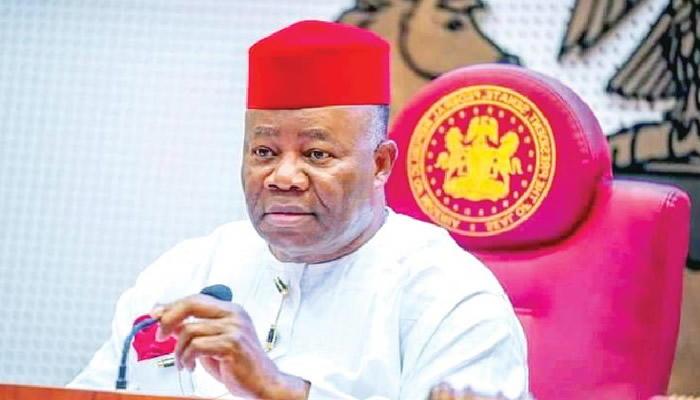
The United Igbo Elders Council (UNIEC) Worldwide has formally communicated its position on a critical national issue, writing an open letter to the Senate President, Senator Godswill Akpabio, regarding state police and what it termed 'its Constitutional Establishment.' This move signifies a major endorsement from a significant socio-cultural bloc in Nigeria for the ongoing debate on decentralizing policing powers. The letter adds considerable weight to the political momentum behind creating state-level law enforcement agencies, a reform long demanded to address local security challenges more effectively.
This development aligns with a definitive declaration from the nation's top police officer. The Acting Inspector-General of Police, Tunji Disu, has stated that the transition to state policing in Nigeria is now irreversible, marking a landmark shift in the country's internal security architecture. Speaking on Thursday, March 5, during the inauguration of the Police Steering Committee on State Police Implementation at the Force Headquarters, the IGP emphasised that the move is essential to addressing Nigeria's unique and evolving security challenges. This official stance from the police leadership suggests that concrete planning and implementation phases are now underway, moving the concept beyond political rhetoric.
While security reforms take center stage, the nation's electoral body has raised a red flag on political stability. The Independent National Electoral Commission (INEC) has lamented that recurring leadership tussles and protracted intra-party disputes are diverting its attention from core election planning. These internal conflicts within political parties are also cited as a factor contributing to growing voter apathy ahead of the crucial 2027 general elections. This warning highlights a potential threat to democratic consolidation, suggesting that political infighting could undermine the integrity and public trust in the upcoming electoral cycle.
On a separate infrastructural front, the federal executive council (FEC) has approved a major project for the commercial capital. The council has given the green light for the demolition and reconstruction of the Carter Bridge in Lagos, a vital artery in the city's transport network. The Minister of Works, David Umahi, announced that the council also approved N5.6 billion for advanced engineering consultants to handle the design and costing of the bridge. This substantial investment indicates a significant infrastructure upgrade is imminent for Lagos, aiming to improve connectivity and safety for millions of daily commuters.
Internationally, a geopolitical crisis with potential local ramifications is unfolding. Spanish Prime Minister, Pedro Sánchez, has responded to a threat from former United States President Donald Trump to cut off all trade with Spain. The threat was reportedly over the Spanish government's refusal to facilitate the US's ongoing attacks against Iran. This transatlantic diplomatic row underscores the complex international alliances and pressures that can emerge from global conflicts, even affecting nations not directly involved in the hostilities.
The tensions referenced by Prime Minister Sánchez follow a severe military escalation. This came as no fewer than 87 people were killed after a US submarine sank an Iranian warship in the Indian Ocean. This incident represents a significant and deadly clash in the ongoing hostilities, raising fears of a broader regional conflict that could destabilize global trade routes, including those crucial to Nigerian imports and exports.
The ripple effects of this international crisis have reached Nigerian shores in a tangible way. The US Embassy in Abuja has cancelled all visa appointments scheduled for a recent day, citing a high potential for protests in Abuja amid escalating hostilities between the US, Israel and Iran. This action demonstrates how geopolitical conflicts thousands of miles away can directly impact Nigerian citizens, disrupting their travel plans and access to consular services due to security precautions taken by foreign missions.
Taken together, these developments paint a picture of a nation navigating complex internal reforms while being affected by distant international strife. The push for state police, backed by Igbo elders and led by the police force itself, represents a profound domestic policy shift. However, this forward momentum on security is juxtaposed with INEC's concerns about political preparedness for 2027 and the immediate disruption caused by global tensions at the US embassy. Nigeria's path is thus being shaped by both its internal democratic and security evolution and its unavoidable connections to a volatile world.