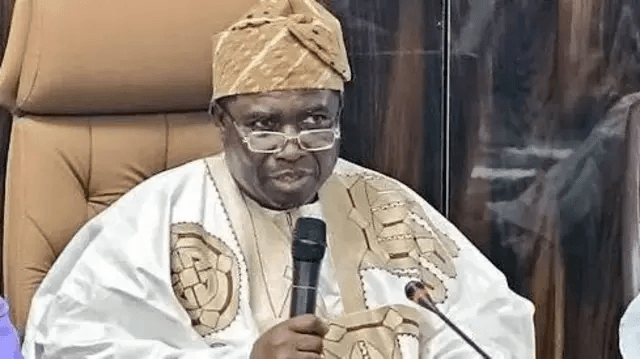
The political terrain in Osun State has been fundamentally altered ahead of the 2026 governorship election. The Independent National Electoral Commission (INEC) has released its final list of candidates, and conspicuously absent are the Peoples Democratic Party (PDP) and the Labour Party (LP). This unprecedented exclusion leaves only 14 political parties in the race, significantly narrowing the field and upending traditional electoral calculations.
The Procedural Stumbling Block
INEC's decision stems from a strict adherence to its published timetable. According to the commission, only the 14 cleared parties successfully conducted their primaries and, crucially, uploaded the names and particulars of their candidates and running mates to INEC's portal before the stipulated deadline. The omission of the PDP and LP suggests a failure to meet these administrative requirements, potentially due to internal party disputes, logistical delays, or legal challenges surrounding their primaries.
The Cleared Contenders
The parties that successfully scaled INEC's procedural hurdle are: Accord (A), Action Alliance (AA), African Action Congress (AAC), African Democratic Congress (ADC), Action Democratic Party (ADP), All Progressives Grand Alliance (APGA), All Progressives Congress (APC), Allied Peoples Movement (APM), Action Peoples Party (APP), Boot Party (BP), New Nigeria Peoples Party (NNPP), Peoples Redemption Party (PRP), Young Progressive Party (YPP), and Zenith Labour Party (ZLP).
A New Political Reality for Osun
This development marks a dramatic departure from recent electoral history in Osun, where the PDP and LP have been formidable forces, commanding significant voter loyalty. Their absence creates a substantial vacuum. The immediate question is how their supporters—a large bloc of the electorate—will respond. Will they boycott, shift allegiance to one of the remaining parties like the NNPP or ADC, or simply stay home?
This scenario appears to bolster the position of the ruling All Progressives Congress (APC), which recently demonstrated its organizational strength in the FCT area council elections. However, it also presents a rare opportunity for smaller parties to make unprecedented inroads. The coming months will be critical as campaigns begin in earnest within this reconfigured political space.
The 2026 Osun governorship election is now set to be a contest under fundamentally new rules, testing the adaptability of the state's political players and the choices of its voters.


