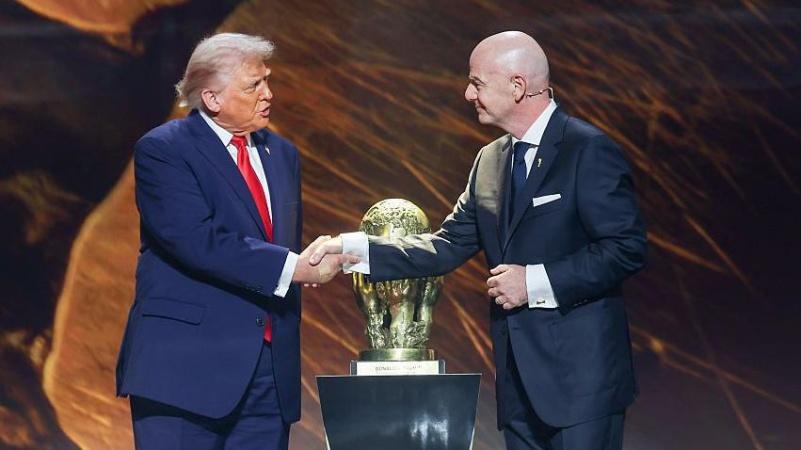
The polished halls of FIFA headquarters in Zurich are a world away from the campaign rallies and diplomatic summits where U.S.-Iran relations are typically debated. Yet, FIFA President Gianni Infantino has brought those worlds crashing together with a single, stark assertion. He claims that former U.S. President Donald Trump will welcome the Iranian national football team at the upcoming FIFA World Cup. This statement, delivered without immediate context or qualification, instantly reframes the tournament as a potential stage for geopolitical reconciliation—or confrontation.
A Politically Charged Entry
Infantino’s declaration is not a minor administrative footnote. It directly addresses one of the most politically charged team entries in the competition. Iran’s participation in global sporting events has long been entangled with international sanctions, diplomatic boycotts, and protests. For the FIFA president to publicly link a former American leader to Iran’s welcome is to deliberately place football at the center of a decades-old conflict. It suggests Infantino sees the World Cup as a tool for diplomacy, capable of bridging divides that have persisted for generations.
Questions of Origin and Intent
The claim raises immediate questions about its origin and intent. Did Infantino speak with Donald Trump directly, or is this an interpretation of Trump’s past statements or potential future actions? The former president has a well-documented history of applying maximum pressure on Iran during his term, imposing severe sanctions and withdrawing from the nuclear deal. A public welcome from him would represent a significant, and surprising, shift in posture. Infantino’s comment, therefore, feels less like a simple prediction and more like a strategic gambit, an attempt to preempt political controversy by invoking a powerful, polarizing figure.
The Sport vs. Politics Debate Reignited
Reactions from the global football community are likely to be sharply divided. Many fans and players believe sport should exist separately from politics, a sanctuary where competition is pure. Infantino's move challenges that notion head-on, explicitly weaving a geopolitical narrative into the fabric of the tournament. Whether this act of 'sports diplomacy' will ease tensions or amplify them remains the critical question as the World Cup approaches.