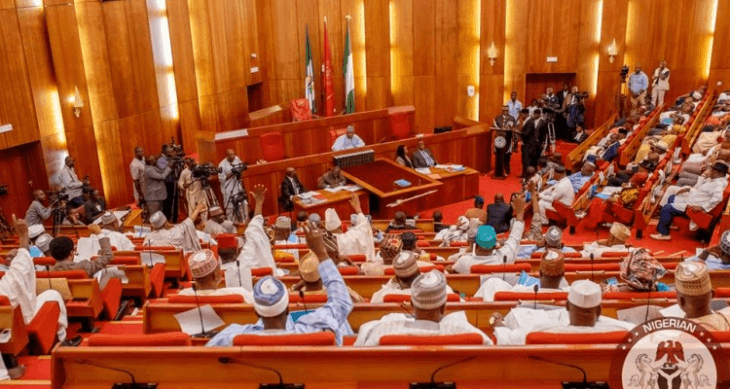
The Inter-Party Advisory Council (IPAC), a body representing Nigeria's political parties, has issued a stark warning that could reshape the nation's democratic process. IPAC has stated that political parties under its umbrella may boycott the 2027 General Elections if the National Assembly does not urgently amend key provisions of the Electoral Act 2026. This threat places immense pressure on lawmakers to review the legislation, which was enacted to govern electoral conduct. The potential boycott represents a significant challenge to the credibility of the upcoming electoral cycle, raising the stakes for legislative action.
IPAC's grievances center on specific parts of the new electoral law, which the council claims weaken multiparty democracy and restrict the rights of political parties to manage their own affairs. The council argues that these provisions, if left unchanged, could directly affect the credibility and acceptance of the next general elections. By linking the integrity of the electoral process to the Act's amendments, IPAC is framing the issue as fundamental to democratic health. The council's statement underscores a growing tension between electoral management bodies and political parties over the rules of engagement.
The council's position was made unequivocally clear in a direct quote: “Should the National Assembly fail to address these anomalies through urgent amendments to the Act, political parties under the umbrella of IPAC will be compelled to boycott the 2027 General Elections.” This ultimatum sets a clear timeline for legislative action, implying that the window for negotiation and amendment is now open. The use of the term 'compelled' suggests that IPAC views a boycott as a last resort, but one it is prepared to undertake. The statement transforms a policy debate into a potential constitutional crisis, demanding immediate parliamentary attention.
Meanwhile, in a separate but significant political development, Senator Seriake Dickson, representing Bayelsa West, has announced his departure from the Peoples Democratic Party (PDP). He is joining the newly registered Nigeria Democratic Congress (NDC), linking his decision to what he referred to as irreconcilable differences within the former ruling party. This defection highlights ongoing realignments within Nigeria's political landscape, potentially weakening the PDP's structure in the region. The move to the NDC, a fresh political entity, illustrates the fluid nature of party affiliations ahead of the next election cycle.
The Nigeria Democratic Congress (NDC) itself is a new actor on the stage, having just received its certificate of registration from the Independent National Electoral Commission (INEC) last week. This registration introduces another competitor into the multiparty system that IPAC is seeking to protect through its demanded amendments. The emergence of new parties like the NDC tests the very electoral framework under debate, as they must navigate the rules IPAC finds restrictive. This context adds layers to the discussion about political space and party management rights in the current Act.
In electoral administration news, the Independent National Electoral Commission (INEC) in Ekiti State has announced plans to display the Preliminary Register of Voters for public scrutiny. This display exercise is a critical step in ensuring the accuracy of the voter roll, a foundational element for credible elections. It will take place from Friday, 6th March, to Thursday, 12th March 2026, in all designated centres across the 177 wards in Ekiti State. This activity represents the ongoing, ground-level preparation for future polls, even as high-level political disputes over the legal framework threaten participation.
On the infrastructure front, the Lagos State Government will begin Phase One reconstruction and expansion works on Ogunnusi Road in the Ikeja Local Government Area on Friday, 6th March 2026. The entire project, spanning Phases 1 and 2, is scheduled to run from that date through to Thursday, 6th January 2028. Phase 1 will cover a 4.5-kilometre stretch from Ojodu-Berger Bus Stop inward to Mobil Filling Station Junction (Ijaye/Agege Bound) and is expected to be completed by Saturday, 6th February 2027. Such long-term development projects continue amidst the political maneuvering, representing the constant governance activities that persist regardless of electoral tensions.
In a parallel development highlighting accountability, the Senate Committee on Public Accounts has summoned former officials of the Nigerian National Petroleum Company Limited (NNPCL). The summoned individuals are the immediate past Group Chief Executive Officer, Mele Kyari, former Chief Financial Officer Umar Ajia Isa, and former Group General Manager Dr. Bala Wunti. They are to answer questions over an alleged N210 trillion not properly accounted for by the company between 2017 and 2023. This summons underscores ongoing legislative oversight of major national institutions, occurring in the same political environment where the electoral law is being contested. The confluence of these events paints a picture of a nation grappling with foundational issues of governance, accountability, and democratic participation as it looks toward 2027.