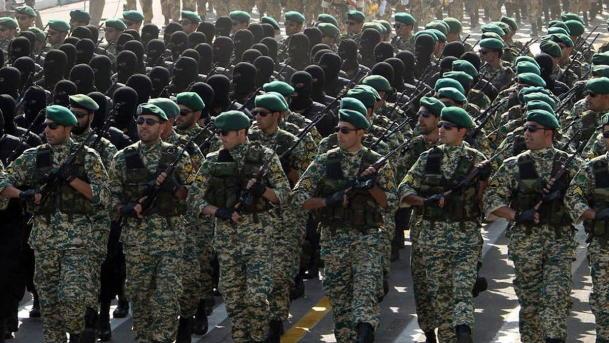
Iran's Islamic Revolutionary Guard Corps (IRGC) has issued a stark and direct military challenge to the United States, declaring it is 'waiting for US forces' at the strategically vital Strait of Hormuz.
The Strategic Chokepoint
The Strait of Hormuz is a narrow maritime passageway, only 21 miles wide at its narrowest point, connecting the Persian Gulf with the Gulf of Oman. It is the single most important global chokepoint for oil. An estimated 21 million barrels per day—representing about 20% of global petroleum consumption—flow through this corridor. Any significant disruption would trigger immediate volatility in global energy markets and economic instability.
A Declaration of Readiness
The statement from the IRGC—a powerful branch of Iran's military designated as a Foreign Terrorist Organization by the U.S.—moves beyond general regional posturing. The phrase 'waiting for' implies a posture of anticipation and preparation for a specific adversary, framing the situation as a potential standoff. This is a deliberate signal of readiness for conflict, not a routine military exercise announcement.
Forces on a Collision Course
In practice, this declaration means the IRGC is likely enhancing its asymmetric naval capabilities in the area. These include swarms of fast attack boats, naval mines, coastal defense missiles, and drones. The U.S. Navy's Fifth Fleet, headquartered in Bahrain, maintains a near-constant presence in and around the Strait to ensure freedom of navigation. The Iranian statement explicitly places these two forces on a heightened collision course.
The Escalation Risk
The grave risk lies in the potential for a minor incident to spiral. A close-quarters maneuver between vessels, a miscommunication, or a perceived threat in these congested waters could escalate rapidly into a broader military engagement. The timing and public nature of the IRGC's challenge significantly increase regional tensions, underscoring the fragile stability of this essential global artery.


