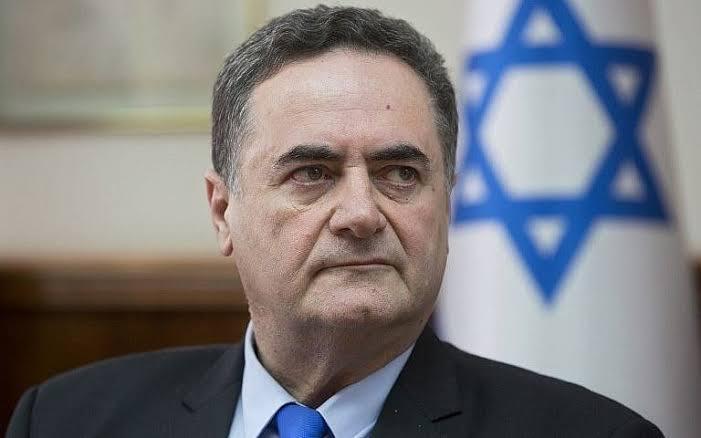
Israel's Defence Minister, Israel Katz, issued a stark threat on Wednesday, stating that any Iranian leader chosen to succeed Supreme Leader Ayatollah Ali Khamenei would be a target for assassination. This declaration comes amidst a significant escalation in hostilities between Israel and Iran, which has rapidly expanded into a broader regional conflict involving military strikes and economic disruption. The threat underscores the profound and personal nature of the confrontation, moving beyond tactical military exchanges to a direct challenge against Iran's future political and religious leadership.
The immediate economic impact of the conflict was felt sharply on global energy markets. On Tuesday, prices surged as Tehran was reported to have attacked ships and energy facilities, leading to the closure of navigation in the Gulf. The benchmark Brent crude oil contract settled up $3.66, representing a 4.7% increase, to reach $81.40 a barrel. This settlement marks the highest price for Brent crude since January 2025, highlighting how quickly regional instability translates into global economic pressure.
European natural gas markets experienced even more dramatic volatility, with prices soaring as much as 40% before paring some gains. This surge added to a 40% increase recorded just the day before, on Monday. The extreme price movements reflect deep market anxiety over the security of energy transit routes, particularly through the Strait of Hormuz, a critical chokepoint for global oil shipments. Iran's Revolutionary Guards claimed to have 'complete control' of the strait, a statement that, if acted upon, could severely constrain global energy supplies.
The military situation on the ground remains fluid and destructive. Israel launched fresh strikes on Iran and Lebanon on Wednesday, with Lebanese state media reporting that a residential building was hit. This follows a series of deadly initial strikes launched jointly by the US and Israel on Iran the previous Saturday. The US military reported that it has hit nearly 2,000 targets since the conflict began, indicating the scale and intensity of the aerial campaign. The conflict's expansion was further evidenced by Saudi Arabia's announcement that it had intercepted two cruise missiles, suggesting the theatre of war is widening across the region.
There are significant conflicting reports regarding the status of Iran's leadership. While Israel's threat presupposes a future succession for Ayatollah Ali Khamenei, other reports claim that Khamenei was killed in the US-Israeli strikes on Tehran. This contradiction is central to understanding the conflict's narrative. If the supreme leader is dead, it would represent a catastrophic blow to the Iranian state and fundamentally alter the war's objectives. However, the ongoing nature of the conflict, described as entering its fifth day, and the focus on future succession in Israeli statements, creates uncertainty about the actual situation in Tehran.
The potential for a massive disruption to oil supply is underscored by statements from Iraq, OPEC's second-largest producer. Iraqi officials stated that the country may be forced to cut production by more than 3 million barrels per day within a few days. However, this warning about a future, drastic cut conflicts with reports of action already taken. As of Tuesday, Iraq was reported to have already decreased production from the massive Rumaila oil field by 700,000 barrels per day and cut a further 460,000 barrels per day from the West Qurna 2 field. The relationship between these existing cuts and the threatened larger reduction is unclear, adding to market confusion.
Political reactions from the United States have highlighted prior awareness of the escalating tensions. US Secretary of State Marco Rubio stated, 'We knew that there was going to be an Israeli action,' acknowledging foreknowledge of the military campaign. Former President Donald Trump offered an analysis of the pre-war diplomacy, saying, 'Based on the way the negotiation was going, I think they (Iran) were going to attack first.' These comments point to a breakdown in diplomatic channels and a belief among US officials that pre-emptive military action was deemed necessary, though they stop short of providing a unified justification for the current scale of the conflict.
For Nigeria, a major oil-producing nation, the surge in global crude prices presents a complex scenario. While higher prices could improve government revenue in the short term, they also threaten to increase the cost of imported refined petroleum products, potentially worsening the nation's fuel subsidy burden or leading to higher pump prices for citizens. Furthermore, the threat to shipping in the Gulf underscores the fragility of global energy logistics, from which Nigeria's economy is not insulated. The direct military threats against state leadership also set a dangerous precedent in international relations that resonates far beyond the Middle East, contributing to a climate of heightened geopolitical risk that affects investment and stability worldwide.


