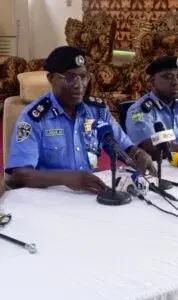
In a significant development for Nigeria's security architecture, the Commissioner of Police for Lagos State Command, Mr. Olohundare Jimoh, has publicly endorsed the proposed establishment of state police. He framed the move as a strategic complement to the Nigeria Police Force, designed to enhance local responsiveness and community participation in crime prevention.
This endorsement comes amid ongoing national debates on restructuring and security governance, aiming to bridge the perceived gap between citizens and the centralized police system.
Simultaneously, Nigeria faced a severe energy setback. The Nigerian Independent System Operator (NISO) reported a sharp 292-megawatt decline in national grid generation, squarely attributing it to insufficient gas supply to thermal power plants.
Data revealed a stark deficit: thermal plants required approximately 1,588 million standard cubic feet of gas per day but received only about 653 MMSCF—a mere 40% of the needed volume. This shortage directly limited generation to 3,118.9MW by Thursday afternoon, with Distribution Companies (DisCos) allocated just 2,749MW for the entire country.
These parallel events underscore two of Nigeria's most persistent challenges: evolving its security framework to be more effective and resolving the chronic issues plaguing its power sector. The push for state police represents a potential shift towards decentralized security, while the grid collapse is a stark reminder of the infrastructure and supply chain vulnerabilities that continue to hinder economic and daily life.