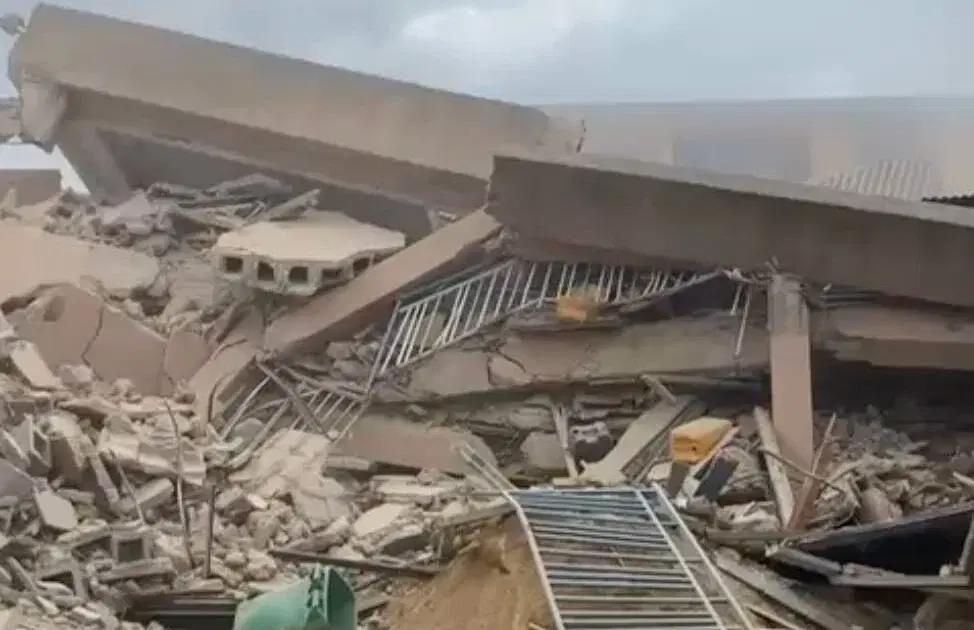
A four-storey building on Adu Street in the Aguda area of Ogba collapsed around 11 a.m. on Monday, housing both a private school and residential occupants. The incident has triggered an official investigation and renewed concerns about construction safety in Nigeria's commercial capital.
A Warning That Prevented Tragedy
Residents reported the structure gave way shortly after a nearby fashion designer spotted a crack in the wall and alerted school authorities and neighbours. According to the Lagos State Building Control Agency (LASBCA), this swift warning allowed for an evacuation before the building caved in completely.
The agency confirmed on Tuesday that no fatalities were recorded. However, the frantic evacuation was not without consequence; some students sustained injuries and were hospitalized.
Renovations Under Scrutiny
The focus has now shifted to the events preceding the collapse. Preliminary observations by LASBCA officials, corroborated by resident accounts, indicate that renovation work was underway on the building's ground floor. The nature and safety of these renovations will be a central part of the state's investigation.
The Regulatory Response
LASBCA, the primary body tasked with enforcing building regulations in Lagos, has launched a full investigation. Key questions include whether proper permits were obtained for the renovation work and if standard safety protocols were followed during construction.
A Recurring Challenge for a Megacity
The collapse occurred in a densely populated area of Lagos, a city grappling with rapid, often unregulated urbanization. Incidents like the one on Adu Street follow a troubling pattern of structural failures frequently linked to unauthorized construction, substandard materials, or poor oversight.
The state government's response to this incident—its investigation's rigor and transparency—will be closely watched as a test of its commitment to preventing future disasters.