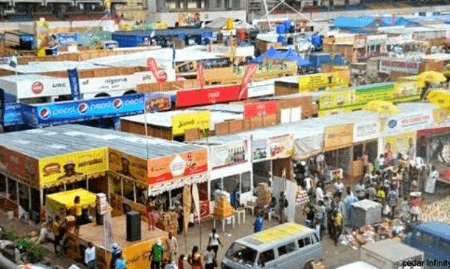
Traders participating in the annual Lagos International Trade Fair contribute billions of naira to Nigeria's Gross Domestic Product, according to the Minister of Industry, Trade and Investment. This declaration underscores the substantial economic weight of the event, which draws thousands of exhibitors and buyers each year. The minister's statement provides a rare official quantification of the fair's direct impact on the national economy.
While the exact figure in billions was not specified, the scale indicates the fair is a multi-billion naira enterprise. For context, Nigeria's GDP was approximately 450 trillion naira in 2025, meaning even a few billion represents a meaningful contribution from a single event. This contribution stems from the aggregate sales, contracts, and business generated during the fair's run, which typically lasts for ten days.
The Lagos International Trade Fair is one of the largest and oldest trade exhibitions in West Africa, acting as a primary marketplace for goods ranging from local crafts to industrial machinery. Its economic impact extends beyond direct sales to include logistics, hospitality, and advertising services that see a surge during the event. This makes the fair a significant economic catalyst for Lagos State and the surrounding region.
In practice, this means the collective output of thousands of small and medium-sized enterprises (SMEs) and informal traders is being formally recognized as a key component of national GDP. Many of these businesses operate outside formal banking and tax systems, making their economic contribution difficult to measure through conventional means. The minister's acknowledgment suggests a growing official appreciation for the informal sector's role in economic stability.
The data point, though broad, aligns with the known structure of Nigeria's economy, where trade and services constitute a dominant share. The informal sector alone is estimated to account for over half of the country's GDP and employs a majority of the workforce. Events like the Lagos Trade Fair provide a structured, temporary formalization of this activity, channeling it into measurable economic output.
Analytically, the claim highlights the importance of event-driven commerce in stimulating economic cycles. A billion-naira injection from a concentrated event can have a multiplier effect, circulating money through various sectors of the local economy. This represents a targeted boost compared to diffuse annual economic activity, demonstrating how flagship trade events can serve as strategic economic levers.
Looking ahead, the next key data point will be the official economic impact assessment from the 2026 Lagos International Trade Fair, expected later this year. Organizers and government agencies are likely to use the minister's statement to advocate for greater investment in trade infrastructure and SME support programs. The focus will shift to whether this recognized contribution translates into more favorable policies for exhibitors and easier access to financing.
The next major milestone is the fair itself, scheduled for later in 2026, where the volume of deals and attendance figures will provide the raw data for the next GDP contribution estimate. Stakeholders will be watching to see if post-event analyses begin to break down the billions into sectors, such as manufacturing, agriculture, or technology, to better understand which segments drive the fair's economic engine.