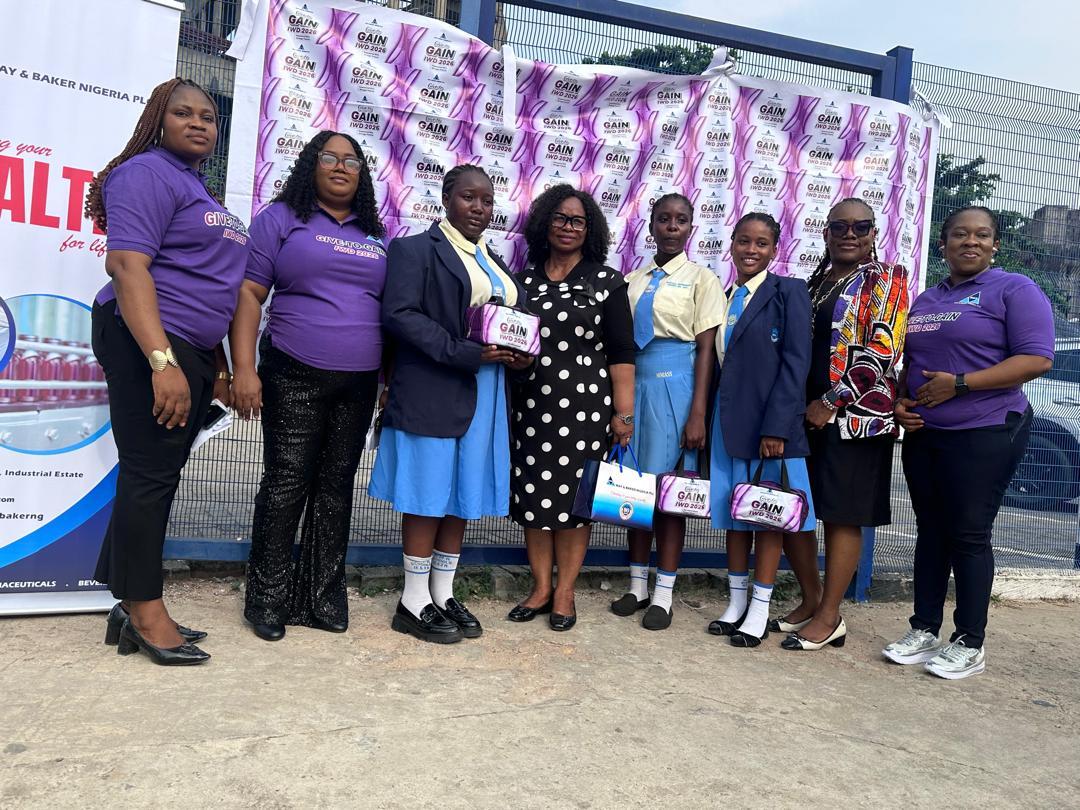
Female staff of May&Baker Nigeria Plc have called for stronger menstrual health education and mentorship for schoolgirls. This direct appeal from corporate professionals to a younger generation represents a targeted effort to bridge a persistent knowledge gap. The call was made during an outreach programme organised to mark the 2026 International Women’s Day for students of Murtala Muhammed Secondary School in Lagos. This specific focus on mentorship, delivered by women in science and business, aims to provide relatable role models alongside essential health information.
As part of the programme, the students received sanitary pads and hygiene kits. This practical support addresses a significant barrier to school attendance and participation for many girls. The distribution of these essential items, coupled with educational outreach, forms a dual-pronged approach to tackling period poverty and stigma. Providing the physical resources is a direct intervention that can immediately reduce absenteeism, which studies in similar contexts have linked to a lack of access to menstrual products.
The initiative's timing, aligned with International Women's Day, frames menstrual health as a core component of gender equity. By focusing on a secondary school in Lagos, the effort targets a critical demographic at a pivotal stage of development. Corporate-led community programmes of this nature signal a growing recognition of social responsibility beyond traditional philanthropy. This event represents a shift from generic corporate donations to issue-specific engagements that leverage employee expertise for community impact.
In practice, this outreach means providing both the tangible resources and the intangible confidence girls need to manage their health without disruption. Access to sanitary products is a fundamental prerequisite for consistent school attendance. Mentorship from professional women offers a powerful model, showing students pathways to future success unhindered by biological realities. The combined approach tackles the problem from two angles: removing the immediate logistical hurdle and building long-term resilience through knowledge and aspiration.
The data on period poverty in many regions underscores the necessity of such interventions. While this single event provided immediate aid to one school, the broader call for systemic education seeks to create lasting change. Scaling this model requires sustained partnership between the private sector, educational institutions, and community organisations. The call for 'stronger' education implies the current curriculum or informal support systems are insufficient, pointing to a gap that targeted corporate advocacy could help fill.
Analytically, the programme's structure offers a replicable template: identify a specific, data-backed barrier to equity (like period-related school absenteeism), partner with a local institution, and deploy employee volunteers for direct engagement. The value lies not just in the distributed kits, but in the signal it sends about normalizing health conversations in educational settings. For a pharmaceutical and consumer goods company like May&Baker, this also aligns with core health and wellness competencies, making the engagement more authentic and potentially more effective.
Looking ahead, the effectiveness of this mentorship and education push will be measured by its ability to be replicated and its long-term impact on the participants. The next logical step for May&Baker could involve establishing a recurring programme or partnering with more schools to gather baseline and follow-up data on attendance and confidence levels. The ultimate goal is to normalize menstrual health conversations and ensure no girl's education is compromised, a target that requires moving beyond one-day events.
Future International Women's Day observances will likely see similar corporate-community engagements, building on this year's model. The focus on a specific, actionable issue like menstrual health education provides a clear framework for measurable impact. The challenge remains in moving from annual events to integrated, year-round support systems within schools. The next data point to watch will be whether this initiative leads to a formal, ongoing partnership or a published case study that other corporations can emulate, turning a single day's outreach into a sustained campaign for change.


