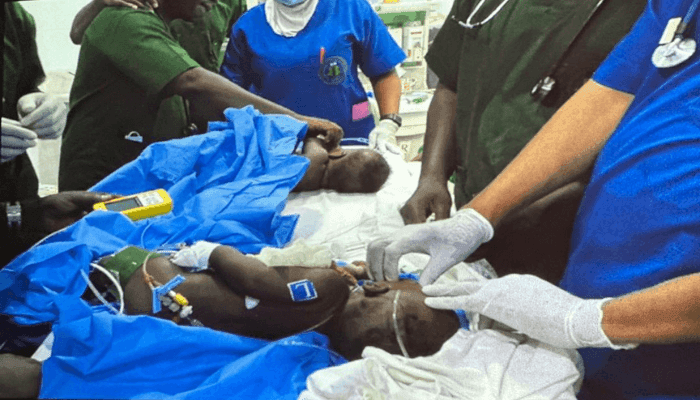
In a significant achievement for Nigerian medicine, Modibbo Adamu University Hospital has successfully separated conjoined twins in a complex, life-saving surgical procedure performed entirely free of charge for the family.
The surgery marks a major milestone for the institution's pediatric surgical capabilities and demonstrates a powerful commitment to providing advanced care based on medical need, not a patient's ability to pay—a principle often tested in resource-limited settings.
Understanding the Challenge
Conjoined twins are a rare congenital condition, occurring in approximately one in every 50,000 to 200,000 births globally. Separation surgeries are among the most demanding procedures in modern medicine, requiring meticulous pre-operative planning and a multidisciplinary team of specialists including pediatric surgeons, anesthesiologists, radiologists, and dedicated nursing staff.
The successful outcome at this Nigerian university hospital underscores the growing surgical expertise available within the country's public healthcare and academic institutions. This development is crucial, as it can reduce the need for families to seek prohibitively expensive treatment abroad, which is often an insurmountable financial hurdle.
Removing the Financial Barrier
The decision to cover all medical expenses removed a potentially catastrophic financial burden for the twins' family. The costs associated with such complex procedures can be devastating, frequently forcing families to rely on charitable campaigns or, in the worst cases, forgo treatment altogether—a decision that can lead to severe health complications.
By ensuring the children received necessary care based solely on clinical need, the hospital has set a compelling precedent for equitable healthcare delivery in a region where out-of-pocket payments remain a primary driver of medical poverty.
A Dual Mission: Care and Education
This case also reflects the hospital's dual role in providing clinical service and advancing medical education. High-complexity cases offer invaluable, hands-on training for medical students and resident doctors, directly enhancing the skills of the future healthcare workforce. Such procedures not only save lives today but also build the capacity to save more lives tomorrow, strengthening the entire healthcare ecosystem from within.