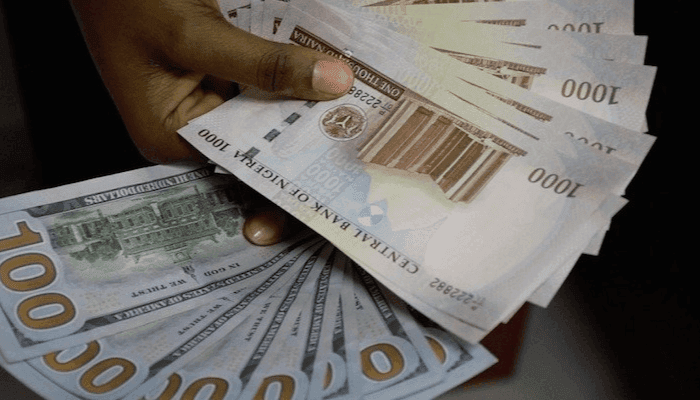
The Nigerian naira demonstrated a notable monthly recovery, strengthening by 4.31 percent over the course of February. This overall gain provides a measure of positive news for an economy that has been grappling with foreign exchange pressures. However, this monthly figure masks a more complex and volatile daily trading environment that has emerged in early March, with conflicting data points creating a murky picture for analysts and the public.
Entering the new month, the naira opened at 1,379.05 per US dollar in the official window on Wednesday, March 4, 2026. This official rate serves as a key benchmark for the market. In a positive sign for currency unification efforts, the parallel market continues to follow the official window closely, with the US dollar being exchanged at rates between 1,385 and 1,395 per dollar. This narrowing gap between official and unofficial rates is a critical goal for the Central Bank of Nigeria (CBN).
Despite the monthly gain, daily movements tell a story of depreciation and conflicting reports. One set of data indicates the naira weakened by N6.27 at the Nigerian Foreign Exchange Market (NFEM) to close at N1,384.29 per dollar on a recent Tuesday. However, another report states that on that same Tuesday, the naira closed at N1,384.29, representing a 0.5 percent depreciation compared to N1,378.02 quoted on Monday. The discrepancy lies in the calculation of the change; the N6.27 figure from an unspecified previous rate contradicts the specific N1,378.02 starting point and the 0.5% depreciation, which would equate to roughly N6.89.
Further contradictions cloud the understanding of the parallel market's performance. While one claim states the naira depreciated to N1,376 per dollar in the parallel market from N1,370 per dollar on a Monday, another presents data from the CBN showing the indicative exchange rate rose to N1,390 per dollar from N1,376 on Monday. This creates a direct conflict on both the starting rate (N1,370 vs N1,376) and the direction of movement.
These market complexities occur against a backdrop of political tensions, with accusations of "selective justice" adding governance challenges to the economic equation. The situation underscores the multifaceted nature of Nigeria's current economic landscape, where currency performance cannot be separated from broader institutional and political factors.