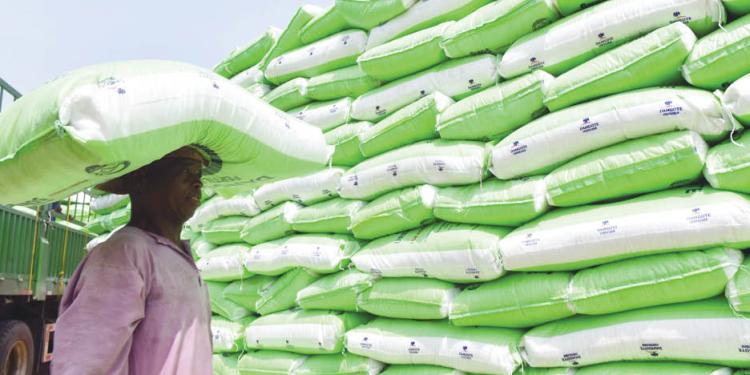
In markets across Nigeria from Kano to Lagos, the soaring cost of staple foods has become a daily source of anxiety for millions. Food inflation has reached crippling levels, with families spending increasingly large portions of their income simply to eat. In response to this growing crisis, the Federal Government has launched one of its most significant agricultural interventions in recent years: a N250 billion credit facility alongside the distribution of 2.15 million bags of fertilizer directly to the farming sector.
Addressing the Financing Gap
The N250 billion agricultural credit represents a substantial financial injection designed to flow to farmers, cooperatives, and agribusinesses nationwide. For years, access to affordable financing has been a critical bottleneck for Nigerian farmers, many of whom rely on informal, high-interest loans that limit their ability to invest in seeds, equipment, and expansion. This new facility aims to unlock production capacity that has been stifled by lack of capital, potentially transforming the agricultural landscape.
Tackling Input Scarcity
Simultaneously, the distribution of 2.15 million bags of fertilizer addresses another perennial challenge: the availability and cost of critical agricultural inputs. Fertilizer scarcity and adulteration have repeatedly led to poor harvests, leaving farmers in debt and markets undersupplied. As Musa, a farmer from Kaduna, explained: 'Last season, I could not find fertilizer at any price. My maize was like a child who did not eat—it did not grow.' This direct deployment seeks to prevent such stories from repeating in the coming planting season.
The Scale of the Crisis
The intervention underscores the severity of Nigeria's food security challenge. As Africa's most populous nation, Nigeria faces multiple pressures including insecurity in key farming regions, climate impacts, and broader economic pressures that have driven food inflation to record levels. The government's move represents a direct attempt to stimulate domestic production at scale, reducing reliance on imports and stabilizing prices for consumers.
Implementation and Impact
Successful implementation will be crucial. The effectiveness of this intervention will depend on transparent distribution mechanisms, ensuring resources reach smallholder farmers who form the backbone of Nigerian agriculture. If executed well, this could mark a turning point in Nigeria's journey toward food self-sufficiency and economic stability.