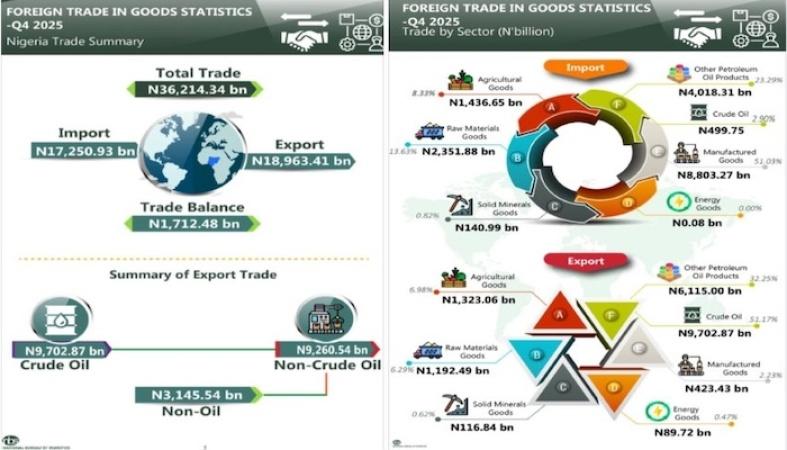
Nigeria's total foreign trade volume contracted sharply to N36.21 trillion in the final quarter of 2025, marking its lowest quarterly level in recent years. The significant drop is primarily attributed to falling revenue from the country's crucial crude oil shipments, according to official data.
The Numbers Behind the Decline
The National Bureau of Statistics confirmed the N36.21 trillion trade value for the October-December period. This figure represents the combined value of all goods and services Nigeria sold abroad and purchased from other countries. The pronounced slide points to a substantial reduction in cross-border economic activity compared to preceding quarters, signaling mounting economic strain.
Oil Dependency: The Core Vulnerability
The contraction is directly linked to a steep decrease in the value of Nigeria's oil exports. Crude oil sales have traditionally constituted the largest component of the country's external trade and a primary source of government revenue. A sustained fall in these exports directly depresses the overall trade figure and critically limits foreign exchange earnings needed to stabilize the economy.
Implications for the Economy
The declining trade volume has immediate consequences for Nigeria's current account balance and foreign reserves. Reduced export income strains the country's ability to finance necessary imports, potentially leading to a wider trade deficit. Furthermore, it constrains the Central Bank of Nigeria's capacity to defend the national currency, the Naira, in foreign exchange markets, increasing devaluation pressure.
The Diversification Challenge
This development places a harsh spotlight on the structural challenges within Nigeria's export sector. Despite years of policy discussions, the economy remains heavily reliant on hydrocarbon sales, leaving it exposed to volatile international oil prices and domestic production issues. Efforts to diversify into non-oil exports—such as agriculture, solid minerals, and services—have yet to generate sufficient volume to offset a pronounced downturn in the primary commodity.
The Path Forward
Policymakers now face intensified pressure to implement effective strategies that stimulate non-oil export sectors and improve the overall trade environment. This may include enhanced incentives for value-added agricultural products and manufactured goods, alongside improvements in port logistics and trade facilitation. The Q4 2025 data serves as a stark reminder that without meaningful progress on economic diversification, Nigeria's trade fortunes will remain tied to the unpredictable tides of the global oil market.