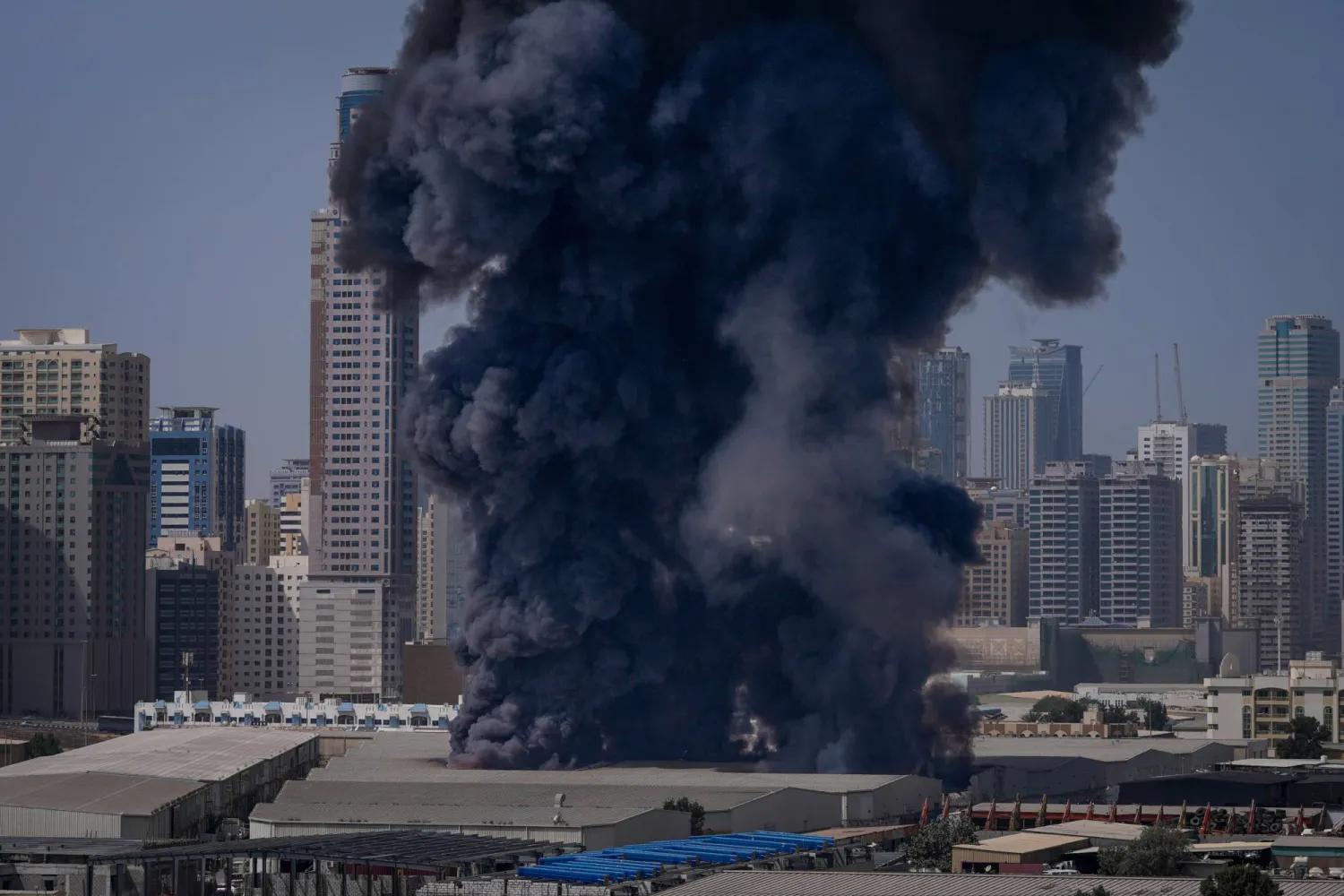
A Nigerian national was among dozens of people injured when the United Arab Emirates (UAE) intercepted a barrage of missiles launched by Iran. This event marks a significant escalation in regional tensions, directly impacting civilians from countries far beyond the immediate conflict zone. The interception, while militarily successful, resulted in casualties on the ground, illustrating the unpredictable human cost of such defensive actions.
The United Arab Emirates is a federation of seven emirates on the Arabian Peninsula, a major global hub for business and travel. Its advanced air defense systems are designed to protect its population and critical infrastructure from aerial threats. Iran, a neighboring nation across the Persian Gulf, has been involved in long-standing geopolitical disputes with several Gulf states and their allies. The launch of missiles toward a densely populated commercial center represents a direct challenge to regional stability.
Intercepting incoming missiles is a complex military operation. Air defense systems like the Patriot or THAAD (Terminal High Altitude Area Defense) are designed to destroy incoming projectiles in mid-air. However, the debris from these interceptions—falling shrapnel and missile parts—can cause significant damage and injuries when it rains down on populated areas below. This 'fallout' effect is what likely led to the dozens of reported injuries, including that of the Nigerian citizen.
For the injured Nigerian, this incident is a stark reminder of the interconnected nature of the modern world. Nigeria is in West Africa, thousands of miles from the Middle East, but its citizens live and work across the globe, including in the UAE, which hosts a large expatriate community. Being caught in a crossfire between two other nations underscores how regional conflicts can have unintended, global victims. It raises immediate questions about the safety of foreign workers and travelers in volatile regions.
The broader significance lies in the demonstration of Iran's reach and the UAE's vulnerability. Successfully firing missiles across the Gulf shows a capability that regional powers have long feared. For the UAE, intercepting them proves its defensive readiness but also exposes a new reality: its thriving cities are now potential targets in a wider conflict. This dynamic could influence foreign investment, tourism, and the daily sense of security for millions of residents.
Historically, tensions between Iran and Gulf Arab states have simmered for decades, rooted in religious, political, and strategic rivalries. The UAE has generally pursued a policy of economic openness and diplomacy, but it has also aligned closely with Saudi Arabia and the United States in opposing Iranian influence. A direct missile attack, even if intercepted, represents a dangerous shift from proxy conflicts and cyber warfare to overt, kinetic strikes. It crosses a threshold that many analysts had warned about.
Looking ahead, the immediate next steps involve emergency response and diplomatic fallout. Medical teams are likely treating the injured, including the Nigerian national, while authorities assess the physical damage. On the diplomatic front, the UAE will almost certainly lodge formal protests with Iran and potentially at the United Nations Security Council, seeking to marshal international condemnation. The response from other global powers, particularly the United States, which has security commitments in the Gulf, will be closely watched.
The key takeaway is that modern conflicts rarely remain contained. A missile launch in the Persian Gulf can injure a citizen from West Africa, disrupt global business hubs, and trigger international crises. This incident serves as a concrete example of the human and geopolitical ripple effects of regional hostilities. The focus now turns to the recovery of the injured and the measures all nations will take to prevent a repeat, with the next diplomatic exchanges setting the tone for either escalation or de-escalation.