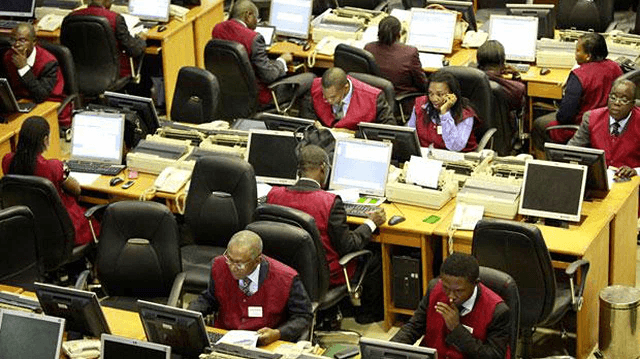
Here's a puzzle for you: what happens when a stock market goes up, but the amount of money moving through it goes down? That's exactly what just played out in Lagos. The NGX All-Share Index, which tracks the performance of Nigeria's biggest companies, climbed a solid 2.15% this week. But here's the twist — the weekly turnover, which is the total value of all the shares that changed hands, actually dipped. So the market's value went up, but people were trading less. That's a pretty interesting signal.
Think of it like a crowded auction where fewer items are being sold, but the ones that do sell are going for record prices. The rising index tells us that, on average, share prices for the companies listed on the Nigerian Exchange are getting more expensive. Investors are willing to pay more for a piece of those businesses. But the dip in turnover means the total cash value of all the deals done this week was lower than the week before. Fewer shares, in monetary terms, were actually swapped between buyers and sellers.
So what does that combination usually mean? Well, it often points to a specific kind of market mood. A price gain on lower volume can suggest that the investors who are in the market are feeling pretty confident — they're holding onto their shares, expecting them to be worth even more later, rather than rushing to sell. It's like they're sitting tight, watching their portfolios grow, instead of actively buying and selling every day. That's a form of optimism, even if it's a quieter one.
Now, this isn't always a clear-cut sign. Sometimes lower volume just means everyone's waiting for a bigger piece of news before they make their next move. But in this case, the index still managed a significant climb. That tells us the buying pressure that was there was strong enough to push overall prices higher, despite fewer total naira being traded. It's the buyers, not the sellers, who are setting the pace right now.
Why should you care if you're not actively trading? Because the All-Share Index is a major barometer for the Nigerian economy. When it's up, it generally reflects confidence in the country's biggest corporations — the banks, the consumer goods giants, the telecoms. Their performance is tied to the health of the broader economy. So a rising tide, even on thinner trading, can be a welcome sign for business sentiment overall.
Of course, we've got to keep an eye on that volume. Sustained growth really needs both rising prices and strong trading activity to back it up. High volume confirms the trend; it shows a broad consensus. Lower volume can sometimes make a rally feel a bit fragile, because it doesn't take as much selling pressure to reverse it. But for this week, the story is about price strength winning out.
Looking ahead, the key question is whether this confidence spreads. Will next week see more investors jump in, boosting that turnover number to match the index's enthusiasm? Or will the market settle into a pattern of steady, quiet gains? The direction of the index in the coming sessions will give us the next clue. For now, it's a week where the market's scoreboard looked good, even if the trading floor was a little less busy.