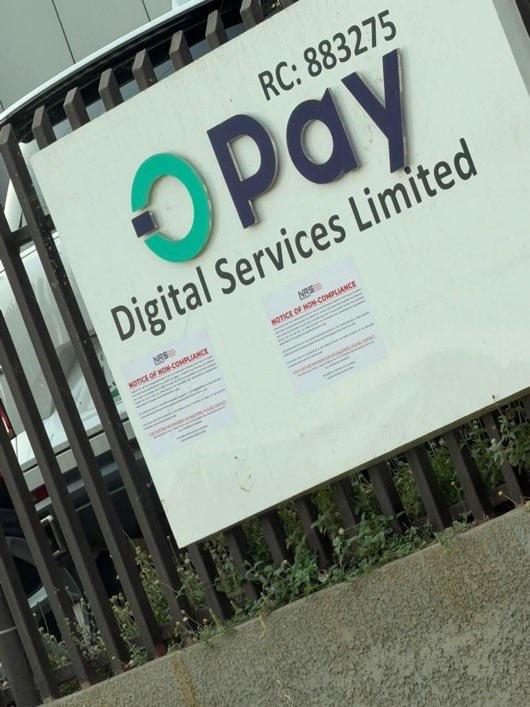
Early Wednesday morning, officials from the Nigeria Revenue Service (NRS) placed 'Sealed' notices on the operational headquarters of fintech giant OPay in Lagos and Abuja. The enforcement action bars all staff and visitors from entering the buildings. According to sources within the NRS, OPay failed to remit statutory taxes despite several formal warnings and reminders.
A targeted audit allegedly uncovered widespread non-compliance regarding Value Added Tax (VAT) and Company Income Tax (CIT). The specific allegations include a failure to collect and remit the mandatory 7.5% Value Added Tax on service fees. This VAT requirement became strictly enforced for digital operators as of January 19, 2026, just weeks before the crackdown.
Records also show infractions related to the disclosure of assessable profits under the Nigeria Tax Act 2025. The posted notices state that the facilities cannot be reopened without authorized clearance from the NRS. Clearance is contingent upon the full settlement of all outstanding liabilities and penalties, which the agency has not yet publicly quantified.
This crackdown is part of a broader 'enhanced enforcement' drive by the NRS. The drive aims to bolster national revenue following tax reforms signed into law by President Bola Tinubu. Under the Nigeria Tax Administration Act 2025, the NRS has been granted expanded powers to seize the proceeds of tax fraud and shut down defaulting corporate entities.
OPay has yet to issue an official response to the sealing of its offices. The company has faced intense regulatory scrutiny in recent months. The Economic and Financial Crimes Commission (EFCC) previously charged OPay management to prioritize compliance with all existing laws.
The NRS has warned other fintech operators that further enforcement actions are imminent for those failing to meet the March 31, 2026, deadline for filing annual tax returns. This gives the industry less than three weeks to ensure their records are in order. The move signals a new, aggressive posture from tax authorities empowered by recent legislation.
Wednesday's action represents a significant escalation in the government's approach to digital economy taxation. By targeting a major player like OPay, the NRS is sending a clear message about the consequences of non-compliance. The case will test the application of the new Nigeria Tax Administration Act 2025 in a high-profile, real-world scenario.
The next phase hinges on OPay's response and its ability to negotiate a settlement with the NRS. The company must now engage with authorities to resolve the alleged liabilities before its operations can resume. The outcome will set a precedent for how Nigeria's updated tax framework governs the rapidly expanding fintech sector.