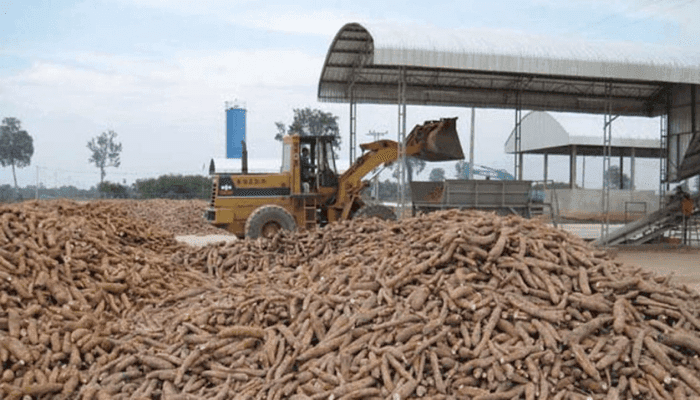
The Ondo state government and food processing company Matna Foods have launched a targeted initiative to recruit and train 3,000 young farmers for cassava production. This public-private partnership directly addresses two critical issues: youth unemployment and the need for a more robust, locally-sourced agricultural supply chain. The program's scale suggests a significant investment in both human capital and the foundational infrastructure of the state's agribusiness sector.
Cassava is a staple crop across Nigeria, used for products ranging from garri and fufu to industrial starch and animal feed. By focusing specifically on this crop, the initiative aims to create a more predictable and high-quality raw material stream for processors like Matna Foods. A deeper, more reliable value chain can reduce import dependencies and stabilize prices for both producers and consumers, which is a stated goal of numerous national agricultural policies.
The explicit targeting of youth is a strategic move to counter the aging demographic profile of Nigeria's farming population. Many young people have migrated from rural areas to cities in search of work, leaving a gap in agricultural labor and knowledge transfer. This program offers an alternative pathway by providing training, and presumably, a guaranteed market for their harvest through the partnership with Matna Foods, making farming a more viable and attractive economic proposition.
For Matna Foods, a company involved in food processing, securing a large, dedicated supply of cassava is a matter of business continuity and growth. Relying on a fragmented network of smallholder farmers can lead to supply inconsistencies and quality fluctuations. By helping to create a cohort of 3,000 trained producers, the company is effectively building a more professional and scalable supplier base to fuel its own expansion and product development.
The success of such an initiative hinges on the specifics of the support package offered to the recruited farmers. While the announcement outlines the recruitment target, the operational details—such as the nature of the training, access to land and improved seedlings, provision of financing or equipment, and the pricing mechanism for the cassava—will be critical. These elements will determine whether the program fosters sustainable entrepreneurship or remains a short-term project.
Ondo State, with its suitable agro-ecology for cassava, stands to gain substantial economic benefits if the program is executed effectively. Increased cassava production can stimulate ancillary businesses in transportation, storage, and small-scale processing within local communities. The state government's involvement signals a policy priority on using agriculture as a tool for job creation and economic diversification beyond the oil sector.
Broader implications of the partnership touch on national food security strategies. Nigeria has repeatedly launched programs to achieve self-sufficiency in staple crops, with mixed results. This targeted, corporate-anchored model in Ondo could serve as a test case for other states and for other commodity chains, demonstrating how to align public sector coordination with private sector market discipline and investment.
The immediate next step for the Ondo-Matna Foods initiative is the operational rollout of the recruitment and training scheme for the 3,000 youth farmers. The pace and transparency of this implementation phase will be the first real indicator of the program's viability and its potential to deliver on its promises of job creation and a deepened cassava value chain.