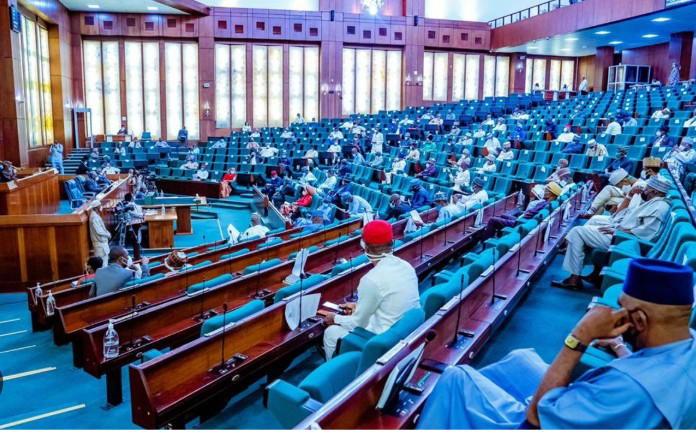
A significant legislative push for climate-focused economic development has emerged in Nigeria's House of Representatives. The Chairman of the House Committee on Renewable Energy, Hon. Afam Victor Ogene, has endorsed a proposal to establish Nigeria’s first dedicated Green and Climate Finance Bank. This endorsement signals potential parliamentary support for a new financial institution aimed at funding environmentally sustainable projects across the country. The move comes as nations globally seek specialized mechanisms to fund the transition to cleaner energy and climate resilience.
The proposal is grounded in substantial economic potential. Nigeria has an estimated $104 billion in climate-smart investment opportunities by 2030, according to the verified claims. A dedicated Green and Climate Finance Bank would be designed to unlock this capital, directing funds towards renewable energy, sustainable agriculture, and green infrastructure. This represents a strategic effort to position Nigeria to benefit from global climate finance flows and meet its national development and climate commitments.
In a separate legal development, the Independent Corrupt Practices and Other Related Offences Commission (ICPC) has been active in court. The ICPC filed a list along with its counter-affidavit at the Federal High Court in Abuja to oppose a N1 billion fundamental rights enforcement suit instituted by Mr El-Rufai. This indicates ongoing legal proceedings involving a former state governor and the nation's anti-corruption agency, though the specific details of the list and the suit's nature are not provided in the verified claims.
On the executive front, President Bola Tinubu presided over key appointments this week. On Wednesday, President Bola Tinubu administered the oath of office to Tunji Disu, officially making him the 23rd Inspector-General of Police (IGP). This formalizes the leadership change at the helm of the Nigeria Police Force, a critical institution for national security and internal order.
The President's swearing-in duties extended beyond the police. The President also administered oaths to six new commissioners of the Revenue Mobilisation Allocation and Fiscal Commission (RMAFC) and two commissioners from the Federal Civil Service Commission (FCSC). These appointments are crucial for the governance of public revenue allocation and civil service administration, filling important roles in Nigeria's bureaucratic structure.
The new Inspector-General of Police, Olatunji Rilwan Disu, has made a definitive statement about his tenure. The Inspector-General of Police has declared that under his leadership, no officer of the Nigeria Police Force will be above the law. This pledge addresses long-standing public concerns about impunity and misconduct within the police, aiming to set a new tone of accountability from the top.
Looking ahead to the next electoral cycle, the IGP issued a specific warning. On the 2027 general elections, the IGP warned that the Force would adopt a zero-tolerance stance on partisanship, abuse of authority and violation of electoral laws. This statement is a pre-emptive measure intended to shape the conduct of police officers years before the polls, emphasizing the need for neutrality in democratic processes.
In unrelated political commentary, a state governor made pointed remarks about his critics. Governor Eno had said that he was nobody’s receptionist and that he was unavailable to pick up phone calls from people. Furthermore, he described the former senator and other critics as “Empty barrels.” This rhetoric highlights the often combative nature of Nigerian political discourse, where public figures openly dismiss their opponents.


