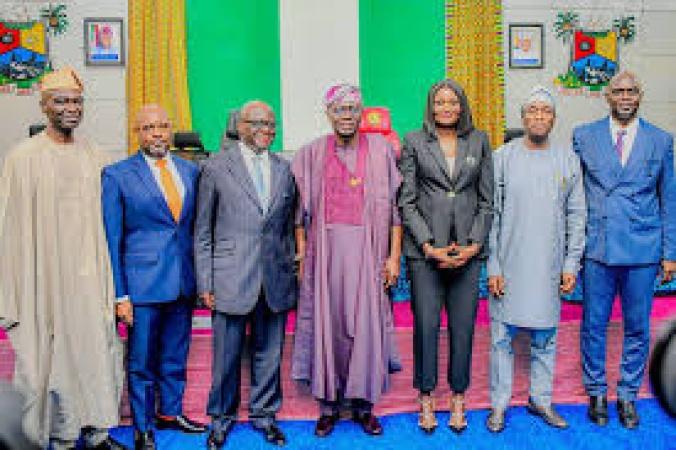
Governor Babajide Sanwo-Olu has formally inaugurated the governing board of the Lagos State Electricity Regulatory Commission (LERC), activating a pivotal institution created by the landmark Lagos State Electricity Law. During the swearing-in ceremony, the governor charged the newly appointed members with a core, consumer-focused mandate: to ensure all Lagos residents receive tangible value for their electricity expenditures.
From Law to Reality: A New Regulatory Era
This official launch transitions the state's electricity policy from legislative framework to operational reality. The LERC is now the primary regulatory body for the power sector within Nigeria's most populous and economically critical state. Its establishment grants Lagos powers over tariff-setting, operator licensing, and service standard enforcement—authorities previously held exclusively by the federal government through the Nigerian Electricity Regulatory Commission (NERC).
A Direct Mandate for Consumer Protection
The governor's emphasis on 'value for money' directly addresses long-standing public frustration over paying for unreliable and often unavailable service. This directive explicitly places the financial burden and service expectations of millions of residents and businesses at the center of the commission's mission. It challenges the new regulators to prioritize measurable consumer outcomes, potentially rebalancing a sector often focused on technical and commercial interests.
What Happens Next?
With its board now in place, the LERC is empowered to begin its substantive work. Its forthcoming decisions will directly impact power generation, distribution, and potentially the cost of electricity across Lagos. The commission's ability to license new, potentially more efficient power providers could introduce much-needed competition and innovation into the local market. This move represents the most concrete step yet in Lagos's ambitious plan to develop its own integrated electricity market, aiming for greater reliability and accountability in a sector fundamental to the state's growth.


