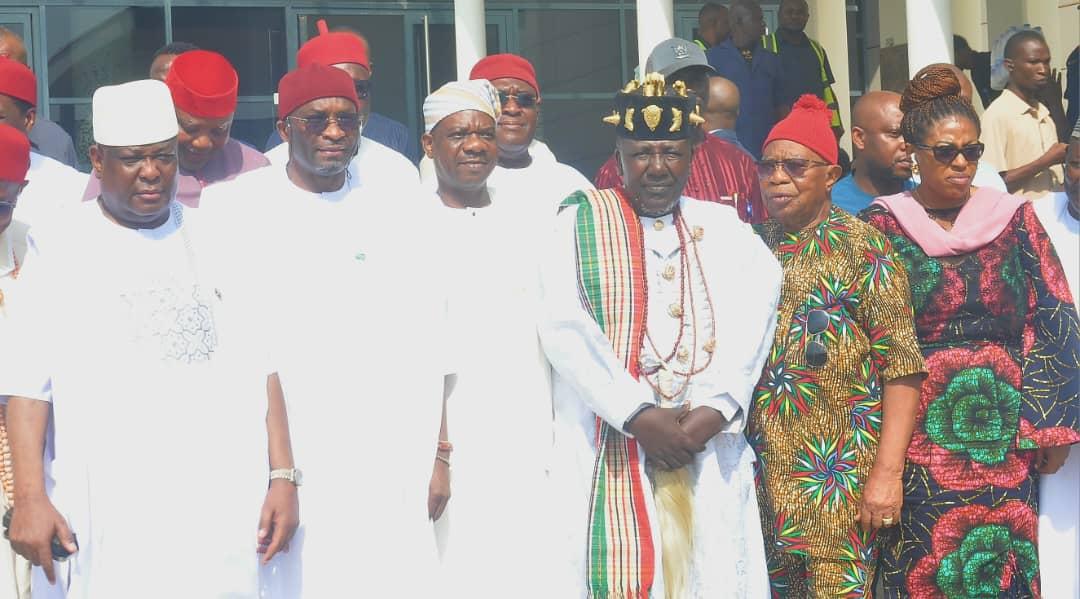
Political leaders from Nigeria's South-East geopolitical zone have formally backed the creation of a new state to be known as ANIM. This collective endorsement represents a unified regional position on a long-standing issue of national restructuring. The leaders are now seeking broader national support to advance the proposal through the constitutional amendment process, marking a pivotal moment in the region's political strategy.
The push for ANIM State originates from a specific demand within the region for increased political representation and administrative efficiency. Proponents argue that the current state structure does not adequately reflect the population and economic contributions of the South-East. Creating a new state is seen as a step toward addressing perceived imbalances in the federal system, particularly regarding the allocation of national resources and political appointments at the federal level.
For the proposal to become reality, it must secure approval from both chambers of the National Assembly. This requires a two-thirds majority vote in the Senate and the House of Representatives, a high threshold designed to ensure broad national consensus. Following legislative approval, the amendment must then be ratified by a majority of state houses of assembly across the country, a process that involves navigating diverse regional interests and political alignments.
The South-East leaders' appeal is directed at lawmakers and the executive branch at the federal level. They are urging national political stakeholders to consider the proposal on its merits for equitable development and national cohesion. This move places the issue of state creation firmly on the national agenda for the current political cycle, compelling other regions to articulate their positions on restructuring.
Historical attempts to create new states in Nigeria have often been protracted and politically complex, with many proposals failing at various legislative stages. The constitutional requirements are deliberately stringent to prevent frivolous alterations to the country's administrative map. The ANIM State proposal will test the political will for restructuring within the current national assembly and the broader appetite for constitutional change in the 2026 political landscape.
Regional cohesion on this issue signals a strategic shift in how geopolitical zones advocate for their interests. A unified front from the South-East increases the political weight of the demand, presenting it as a collective regional aspiration rather than a parochial community request. It contrasts with past approaches where such requests were fragmented among various communities and interest groups, which diluted their political impact.
The call for ANIM State intersects with broader national debates over resource allocation, representation, and the federal structure. Its progression will be closely watched as an indicator of the government's openness to constitutional change and its response to calls for a more balanced federation. The outcome will have direct implications for similar demands from other regions across the country, potentially setting a precedent for future state creation efforts.
The next concrete step involves the formal presentation of a bill for the creation of ANIM State to the National Assembly. Legislative committees, particularly the Committees on Constitution Review and States and Local Governments, will then be tasked with reviewing the proposal's viability, demographic and economic justifications, and its alignment with constitutional provisions. A timeline for committee hearings, public consultations, and subsequent floor debates will establish the proposal's immediate political trajectory and its chances of success in the current legislative session.