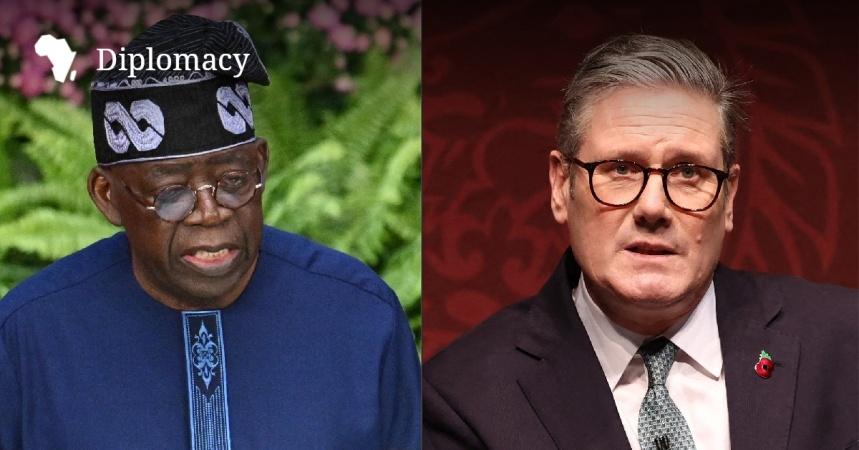
In a significant move for Nigeria's energy sector, President Bola Tinubu announced the successful conclusion of a historic settlement agreement between the Federal Government of Nigeria, ENI, and Nigerian Agip Exploration Limited (NAEL). This agreement brings to a close the long-standing dispute over Oil Prospecting Licence (OPL) 245, a conflict spanning more than 15 years. The resolution, signed in Abuja, clears a major legal and financial hurdle that has stalled development of one of the country's most significant deepwater resources for over a decade and a half.
The settlement of the OPL 245 dispute is a direct attempt to unlock substantial investment and boost Nigeria's oil production capacity. With the legal impediments now removed, the pathway is clear for a Final Investment Decision on the Zabazaba–Etan deepwater development project. This project is capable of adding approximately 150,000 barrels of crude oil per day to Nigeria's national production capacity, representing a potential major boost to government revenue and foreign exchange earnings at a critical economic time.
In a separate development concerning national infrastructure, the Federal Airports Authority of Nigeria (FAAN) has adopted a temporary hybrid payment system at airport toll gates. This decision follows a directive from President Bola Tinubu to ease the implementation of the cashless policy across the nation's airports. The Managing Director of FAAN, Mrs Olubunmi Kuku, disclosed this adjustment to journalists on Thursday in Lagos, highlighting the practical challenges of a full digital transition.
Mrs Kuku explained that the authority's decision to implement the hybrid system was a direct response to severe traffic gridlocks recorded at major airport toll points, particularly in Lagos. These crippling jams occurred when FAAN attempted to transition fully to digital payments, demonstrating the logistical difficulties of enforcing a blanket cashless policy in high-traffic areas. The temporary measure aims to balance the push for digital transactions with the need to maintain smooth passenger and vehicular flow at key national gateways.
On another policy front, the Federal Government has moved to dispel widespread confusion surrounding a recent decision by the Federal Executive Council. The Council, chaired by President Tinubu, approved an amendment to the Act governing the Nigerian Postgraduate Medical College. In a statement issued Thursday night through the Director of Press and Public Relations for the Federal Ministry of Education, Boriowo Folasade, the government insisted that a Doctor of Philosophy (PhD) degree will not replace or be considered equivalent to a medical fellowship in Nigeria.
The Ministry of Education clarified that the Council's decision simply grants the Nigerian Postgraduate Medical College the authority to seek accreditation from the National Universities Commission (NUC) to award PhD degrees in relevant medical and research fields. This move is intended to expand the academic and research capabilities of the institution, not to alter the professional standing of medical fellowships. The clarification seeks to reassure the medical community that the traditional pathway to specialist qualification remains intact and distinct from academic doctoral programs.
In a personnel move within the Presidency, President Bola Tinubu has promoted a close political ally, Alhaji Ibrahim Kabiru Masari, to the position of Special Adviser on Political Affairs. Masari was initially appointed in 2023 to the role of Senior Special Assistant on Political Affairs, indicating a elevation in his advisory capacity within the administration. The Katsina-born politician brings a background in party machinery, having previously served as the All Progressives Congress (APC) welfare secretary during Senator Adams Oshiomhole’s tenure as party chairman.
In his new role as Special Adviser, Masari will work alongside Alhaji Yau Darazo, who was appointed to the same office by President Tinubu in July 2023. This dual-adviser structure suggests the President is consolidating his political advisory team with trusted figures who have longstanding ties to the ruling party's internal structures. The promotion underscores the ongoing shaping of the administration's core political strategy team as it navigates complex domestic policy landscapes.
These simultaneous announcements from the Tinubu administration highlight a multi-pronged approach to governance, addressing critical economic, infrastructural, educational, and political fronts within a short timeframe. From unlocking a major oil investment to adjusting public service logistics and clarifying professional education pathways, the government is signaling activity across several sectors. The resolution of the OPL 245 dispute stands out as a potentially transformative economic event, while the other measures reflect ongoing operational adjustments and clarifications in response to practical challenges and public feedback.