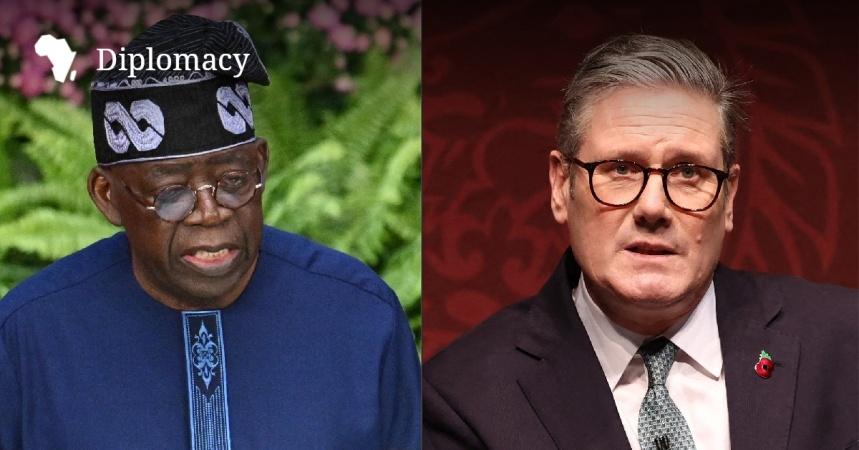
President Bola Tinubu has publicly declared himself a 'die-hard democrat,' a statement that frames his administration's recent actions. This self-identification comes as the President has taken concrete steps on electoral governance and economic management. The declaration serves as a direct assertion of his political philosophy and governing principles.
A central action underpinning this democratic commitment was Tinubu's signing of the Electoral Act into law on February 18. This legislation establishes the legal framework for conducting elections in Nigeria. Its enactment is a significant milestone for the administration, directly tying the President's rhetoric to a substantive policy achievement. The law's provisions will shape the conduct of future polls and electoral disputes.
On the economic front, President Tinubu has nominated Lamido Abubakar Yuguda as Deputy Governor of the Central Bank of Nigeria. This appointment places a seasoned financial regulator in a key monetary policy role. Yuguda brings extensive experience from his previous position as Director-General of the Securities and Exchange Commission, a role he held from 2020 to 2024. His nomination signals a focus on regulatory expertise within the nation's central banking institution.
Yuguda's tenure at the Securities and Exchange Commission covered a critical period for Nigeria's capital markets. Serving from 2020 to 2024, he oversaw market regulation during a time of global economic uncertainty. His move to the Central Bank suggests an intent to integrate capital market perspectives into broader monetary policy. This cross-institutional experience is viewed as a strategic asset for the financial sector.
In another key appointment, Dr. Taiwo Oyedele was appointed as Minister of State for Finance. This role places him directly within the executive team responsible for fiscal policy and national budgeting. The appointment is part of the administration's broader effort to staff economic ministries with technical experts. Oyedele's mandate will involve supporting the coordination and implementation of the federal government's financial strategy.
Historical context shows a significant shift in Nigeria's political landscape over the past decade and a half. In 2008, the opposition Peoples Democratic Party (PDP) controlled 28 states, demonstrating its former national dominance. This historical fact highlights the cyclical nature of political power in the country's democratic system. The current administration operates within this context of evolving party control.
However, verified claims present a direct contradiction regarding the current distribution of state control. One claim states the ruling All Progressives Congress (APC) controls 31 states, while another asserts that after the 2023 polls, the PDP held sway in 13 states. Assuming these figures refer to the same period and that control is exclusive, the combined total of 44 states would exceed Nigeria's 36 states, indicating a clear discrepancy in the reported data. This conflict remains unresolved within the available verified information.
The series of appointments and the enactment of the Electoral Act demonstrate tangible governance outputs following the President's declaration. The next significant step will be the Senate's confirmation hearings for the nominated Deputy Governor of the Central Bank. This process will provide a public forum to examine the nominee's qualifications and the administration's policy direction for monetary authority.