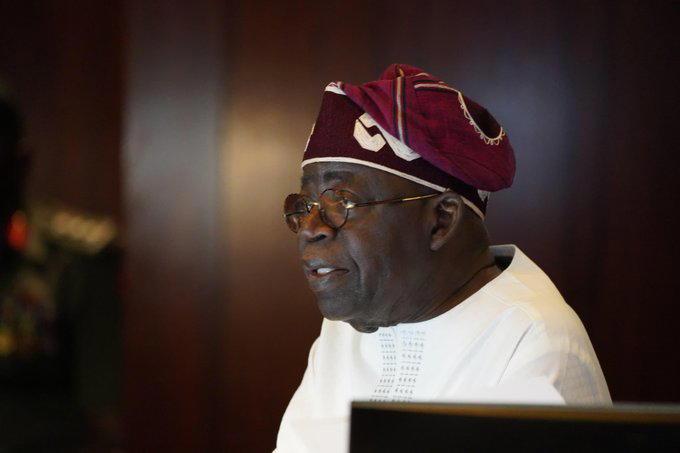
President Bola Tinubu on Thursday announced the successful conclusion of a settlement agreement between the Federal Government, Eni and Nigerian Agip Exploration Limited over Oil Prospecting Licence (OPL) 245. This agreement brought to a close the long-standing dispute over OPL 245, which had lasted more than 15 years and was widely regarded as one of the most prominent legacy issues in Nigeria’s oil sector. The resolution is a significant administrative move intended to unlock stalled energy investments.
With the settlement now in place, the pathway is clear for a Final Investment Decision on the Zabazaba–Etan deepwater project. This development is crucial for Nigeria's oil production capacity, as the project is expected to add about 150,000 barrels per day. President Tinubu described the agreement as a strategic milestone in the administration’s economic reform agenda, signaling a push to resolve historical impediments to growth.
In a statement, President Tinubu said, 'This resolution sends a clear signal to global investors that Nigeria is prepared to address legacy issues transparently and uphold the rule of law.' This quote underscores the government's intent to improve the investment climate by settling complex legal and commercial disputes that have plagued the sector. The move is positioned as part of broader economic reforms under the current administration.
Separately, in a demonstration of public discontent over basic services, residents of Minna, the Niger State capital, staged a peaceful protest on Thursday. They were protesting persistent power outages and what they described as exploitative estimated electricity billing by the Abuja Electricity Distribution Company (AEDC). The protest was convened by human rights activist and Chief Executive Officer of Human Rights Radio, Lanre Sadiq, and attracted residents, civil society groups, and youth organisations.
Lanre Sadiq highlighted the financial burden on citizens, stating that some residents in small apartments pay as much as ₦46,000 monthly under the estimated billing system. This statistic illustrates the severe economic strain unreliable power supply and opaque billing practices place on ordinary Nigerians. The protest in Minna reflects a nationwide frustration with the power sector, a critical infrastructure challenge that contrasts with high-level oil deals.
In another significant development, the Senate committee on public accounts has summoned a former Group Chief Executive Officer of the Nigeria National Petroleum Company Limited (NNPCL), Mele Kyari. He is to explain an alleged ₦210 trillion that was not properly accounted for between 2017 and 2023. Kyari was summoned alongside a former chief financial officer, Umar Ajia Isa, and former group general manager of National Petroleum Investment Management Services, Bala Wunti.
The committee warned that it could issue warrants of arrest against the former officials if they failed to appear. The chairman stated that the committee resolved the NNPCL must account for the ₦210 trillion flagged in audit reports, comprising ₦103 trillion and ₦107 trillion that were allegedly not properly explained in the company’s financial statements. This probe into past management underscores ongoing scrutiny of Nigeria's oil revenue governance.
On the political front, the National Rescue Movement (NRM) accused some political actors of trying to use the courts to take control of its leadership ahead of the 2027 elections. The party said what began as an internal disagreement has now grown into a larger issue involving the Independent National Electoral Commission (INEC). However, a spokesperson named Obi stated, 'INEC is not in breach of any court order in relation to the National Rescue Movement (NRM).'
According to the NRM chairman, the crisis began on September 19, 2024, when the party suspended its then National Chairman, Mr. Isaac Chigozie Udeh, over alleged anti-party activities and gross misconduct. This internal strife highlights the political maneuvering that often intensifies as election cycles approach in Nigeria. In a related personnel move, President Bola Tinubu promoted Ibrahim Masari from Senior Special Assistant to the more senior role of Special Adviser on Political Affairs, indicating ongoing adjustments within the political advisory framework.


