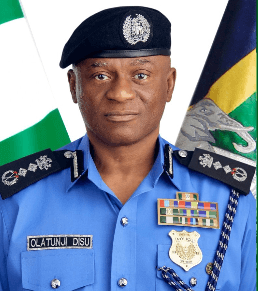
President Bola Tinubu on Wednesday officially installed Tunji Disu as the 23rd Inspector-General of Police of Nigeria. The swearing-in ceremony was conducted at the Council Chamber of the Presidential Villa in Abuja, marking a formal transition in the leadership of the nation's primary law enforcement agency. This administrative act by the President sets the stage for a new operational direction under IGP Disu's command.
In the same session, President Tinubu also administered oaths to six new commissioners of the Revenue Mobilisation Allocation and Fiscal Commission and two commissioners from the Federal Civil Service Commission. This indicates a broader agenda of filling key governmental positions to steer various commissions. The simultaneous swearing-in underscores the administration's focus on governance structure and fiscal oversight alongside security leadership.
Immediately following his inauguration, IGP Tunji Disu addressed pressing security concerns. He disclosed that the Nigeria Police Force is closely monitoring developments in the Middle East, expressing concern that regional tensions could have repercussions within Nigeria. To preempt any potential fallout, he stated that the police had intensified surveillance and patrols across the country to forestall any breakdown of law and order, highlighting a proactive stance on international events affecting domestic security.
IGP Disu also made a firm declaration on internal discipline within the force. He stated that under his leadership, no officer of the Nigeria Police Force will be above the law. This pledge is a direct response to long-standing public concerns about police impunity and misconduct. By setting this tone early, the new police chief signals an intent to reform the institution's culture and restore public trust.
Looking ahead to the 2027 general elections, the Inspector-General issued a stern warning. He said the Force would adopt a zero-tolerance stance on partisanship, abuse of authority, and violation of electoral laws. This statement aims to position the police as a neutral arbiter in the democratic process, crucial for ensuring free and fair elections. It serves as an early notice to political actors and officers alike about the expected conduct during the electoral cycle.
On the political front, the ruling All Progressives Congress is already making strategic moves for the 2027 polls. Deputy Speaker of the House of Representatives, Benjamin Kalu, asserted that the APC in Abia State has what it takes to win the general elections in the state. This comment reflects the party's ambition to make further inroads in the South-East region, which has traditionally been a challenging political landscape for the APC.
In a related development within the Abia APC, former Minority leader of the Abia State House of Assembly, Hon. Chijioke Chukwu, was chosen by consensus as the new Chairman of the party's chapter in the state. This internal consolidation through consensus suggests an attempt to present a united front and avoid divisive primaries ahead of the crucial election year. It represents a key step in building the party's structure and leadership in Abia.
Meanwhile, in Kaduna State, Governor Uba Sani made a significant declaration about the upcoming APC primaries. He disclosed that he has no preferred candidates among the aspirants jostling for elective positions. According to the governor, President Bola Tinubu is his only candidate, and he promised to ensure his re-election in the 2027 election. This statement underscores the governor's alignment with the national party leadership and his focus on the presidential race over local kingmaking, potentially influencing the dynamics of party primaries in his state.


