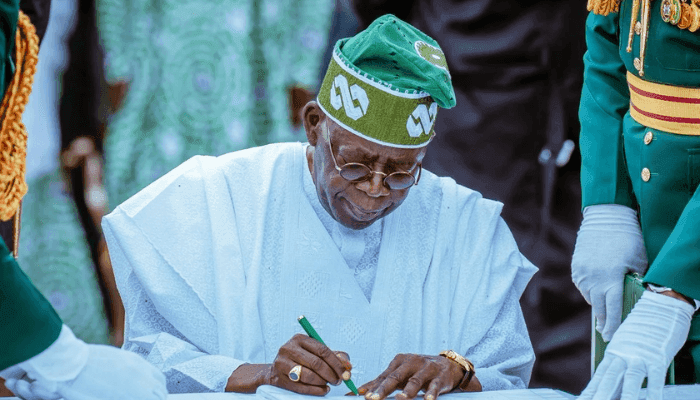
President Bola Tinubu has issued a definitive assurance that Nigeria will never allow agents of instability to succeed. The President's statement represents a direct commitment to national security amid ongoing challenges. His declaration serves as the government's official position on countering threats to the nation's stability.
This security pledge arrives as a major global oil shock directly impacts Nigeria's economy. The price of crude oil has surged to $110 per barrel, a significant increase driven by a critical disruption to global supply. The cause of this disruption is the blockade of the Strait of Hormuz to nearly all oil tankers, a vital maritime passage for global energy exports.
The blockade's immediate effect has been felt at Nigerian petrol stations, where prices have risen sharply. The Dangote Group has adjusted its gantry prices for petrol to N1,175 per litre. This price hike reflects the increased cost of crude oil on the international market and its downstream impact on local fuel markets. Nigerian consumers are now bearing the direct cost of the geopolitical crisis in the Middle East.
International developments are shaping the context of this energy crisis. Former US President Donald Trump stated that US military operations in Iran would be ending soon. This announcement adds a layer of geopolitical uncertainty to a region already destabilized by the blockade of the Hormuz Strait. The interplay between US policy and Middle Eastern security directly influences global oil flows and prices.
Despite these severe economic headwinds, the Nigerian government is pressing forward with long-term economic plans. Nigeria has officially signed the Hosting Agreement for the 2027 Intra-African Trade Fair, which will be held in Lagos. This agreement locks in the country's commitment to host a major continental economic event. The fair, known as IATF2027, has ambitious targets for boosting trade and investment across Africa.
Organizers of IATF2027 are targeting US$50 billion in trade and investment deals during the event. This goal underscores the scale of the economic initiative Nigeria is championing. The hosting rights position Lagos as a central hub for pan-African commerce for the coming years. The government is attempting to balance immediate crisis management with strategic economic positioning.
The current situation presents a complex challenge for Tinubu's administration, which must simultaneously address security vows and economic pressures. The blockade-induced oil price spike creates inflationary pressure and strains the national budget. The President's firm stance on security aims to project control and resolve during a period of dual crises. His message is intended to reassure citizens and investors alike of the state's resilience.
The government's next major public engagement is the preparation for the 2027 Intra-African Trade Fair in Lagos, a concrete step in its economic diversification agenda. Officials will now work to implement the signed hosting agreement and begin logistical planning. The success of this event is framed as a counter-narrative to current economic difficulties, aiming to secure future growth. The administration's performance will be judged on its ability to navigate the present storm while building for the 2027 showcase.