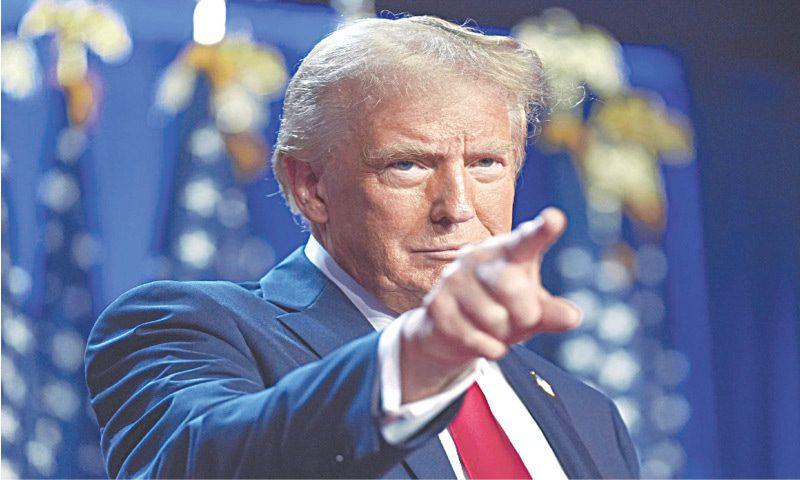
In a move that breaches traditional diplomatic norms, former U.S. President Donald Trump has publicly declared he should be involved in selecting Iran's next supreme leader. This intervention follows the death of long-ruling Ayatollah Ali Khamenei and inserts Washington directly into Tehran's most sensitive political transition.
Trump made the remarks in an interview with Axios, explicitly dismissing Mojtaba Khamenei—the late leader's son and a leading succession contender—as a 'lightweight' and stating he was 'unacceptable.' The former president argued the U.S. should seek a leader who would bring 'harmony and peace' to Iran.
Drawing a parallel to Venezuela, where he referenced involvement 'like with Delcy' (alluding to Delcy Rodríguez), Trump framed U.S. influence over foreign leadership appointments as a legitimate policy tool. This represents an unprecedented claim of external authority over Iran's theocratic succession, traditionally managed by the country's Assembly of Experts.
The geopolitical stakes are high. Trump warned that if Iran installs another hardline leader continuing Khamenei's policies, the United States could be at war within five years. This frames Iran's internal succession as a direct U.S. national security issue with potential for renewed military conflict.
For Nigeria, the escalating tensions present a clear concern: the safety of Nigerian citizens in Iran and the broader region. The Nigerian government is closely monitoring the situation, aware that instability in the Middle East often has ripple effects on diaspora communities and global security. As world powers posture, the priority for Abuja remains the welfare of its people abroad.