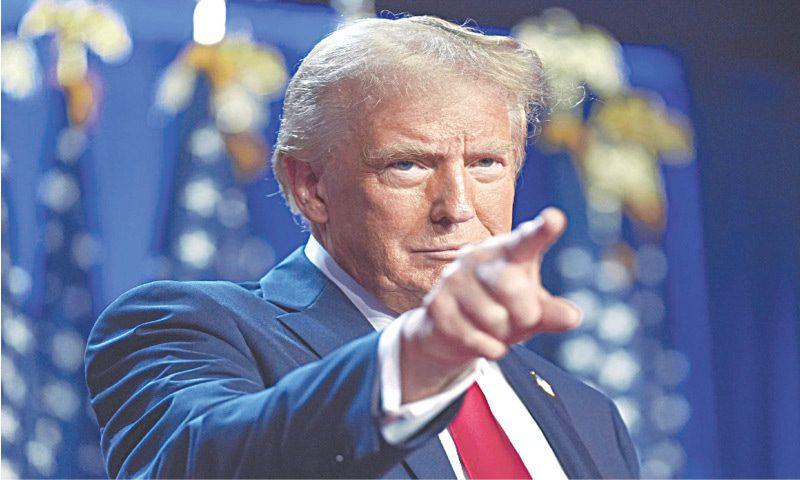
Former President Donald Trump has called on leaders across Latin America to use their national militaries to directly combat drug trafficking cartels. In a significant policy proposal, he has offered United States missile support to assist these potential military campaigns. This approach advocates for a dramatic escalation from law enforcement and interdiction efforts to full-scale armed conflict against criminal organizations.
The offer of US missile support suggests the provision of advanced weaponry, potentially including precision-guided munitions, to Latin American armed forces. Such military aid would represent a substantial increase in the lethality and scope of US involvement in the region's drug war. The proposal moves beyond intelligence sharing or training to active material support for offensive operations.
Historically, US policy in the region has focused on cooperation with civilian law enforcement agencies, despite some military training and equipment programs. Trump's call explicitly shifts the primary response from police and judicial systems to national armies. This could fundamentally alter the nature of the decades-long struggle against transnational criminal networks.
The strategy implies treating powerful cartels not merely as criminal enterprises but as insurgent or paramilitary forces requiring a conventional military response. It acknowledges the cartels' own significant firepower and territorial control in parts of Mexico and Central America. Advocates of a harder line argue that cartels have effectively become narco-states that civilian authorities cannot dismantle.
Critics of militarization warn that past military engagements against cartels have often led to increased violence and human rights abuses. They point to experiences in countries like Mexico, where deploying the army against cartels was followed by a surge in homicide rates. There are also concerns about further eroding the line between civilian and military governance in democracies.
The proposal raises immediate questions about sovereignty, as it involves US support for military actions within other nations' territories. Latin American countries have historically been sensitive to US intervention in their internal security matters. Any acceptance of the offer would require careful negotiation of rules of engagement and oversight mechanisms.
From a US perspective, such a policy would require congressional approval for major arms transfers and could draw the country deeper into foreign conflicts. It also presents logistical and strategic challenges, including defining clear objectives and exit strategies for military campaigns against diffuse, adaptive criminal networks. The potential for mission creep and unintended consequences is significant.
Trump's public urging of foreign leaders indicates he is making this a central plank of his foreign policy platform. The offer sets a potential precedent for how a future administration might approach hemispheric security. The response from Latin American capitals, which has not yet been detailed in the verified claims, will determine whether this proposal moves from rhetoric to reality.