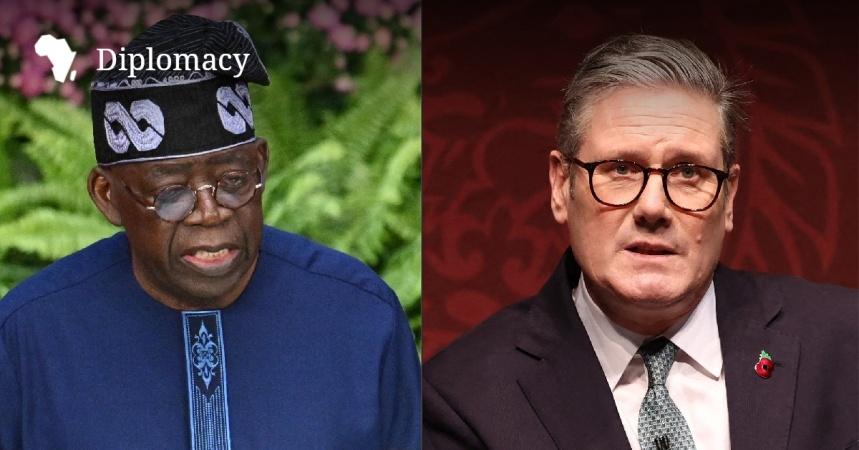
In a striking display of parallel political narratives, former US President Donald Trump's administration shake-up coincided with significant announcements from Nigeria's Presidency regarding the nation's energy sector. The contrasting developments offer a window into the priorities and styles of two major political figures.
The US Cabinet Reshuffle: Security and Foreign Policy Pivot
Donald Trump announced the termination of Kristi Noem's tenure as Secretary of the Department of Homeland Security, a powerful cabinet position overseeing domestic security, border control, and counterterrorism. In her place, Trump appointed 48-year-old Republican Senator Markwayne Mullin of Oklahoma, effective March 31.
However, Noem's departure from Homeland Security does not mark her exit from the administration. Trump simultaneously revealed her new assignment as his special envoy for 'The Shield of the Americas,' a forthcoming security initiative for the Western Hemisphere set to be formally unveiled this Saturday. This reassignment suggests a strategic shift, moving a key domestic security figure into an international diplomatic role focused on hemispheric security.
In a separate but related development, Trump's interview with Axios revealed his continued focus on Middle Eastern geopolitics. He asserted he should play a role in selecting Iran's next supreme leader following Ayatollah Ali Khamenei's death, dismissing Khamenei's son as a 'lightweight.' Trump warned that without a favorable leader in Tehran, the United States would likely return to war within five years, underscoring his administration's deep engagement with Iran's political future.
Nigeria's Energy Sector Announcement: Resolving OPL 245
While Trump reshuffled his team, Nigerian President Bola Tinubu's administration presented what it characterized as a major achievement for the nation's energy sector. According to a statement by Presidential Media Adviser Bayo Onanuga, Tinubu announced the successful conclusion of a historic settlement agreement between the Federal Government of Nigeria, ENI, and Nigerian Agip Exploration Limited.
The agreement, signed in Abuja, brings to a close a dispute over Oil Prospecting Licence (OPL) 245 that has persisted for more than 15 years. This resolution potentially paves the way for developing one of Nigeria's most significant deepwater oil resources, which has remained largely untapped due to the prolonged legal and commercial disagreements.
Analysis: Contrasting Political Communications
The simultaneous announcements reveal different approaches to political communication and priority-setting. Trump's moves emphasize personnel changes, bold foreign policy statements, and the creation of new initiatives. The Nigeria announcement focuses on resolving longstanding commercial disputes to unlock economic resources.
For Nigeria, the OPL 245 settlement represents potential progress in untangling complex energy sector disputes that have hindered investment and production. However, observers will watch closely to see if this agreement translates into tangible development and revenue for the nation, or whether implementation challenges persist.
Meanwhile, Trump's security team reshuffle and comments on Iran demonstrate his continued focus on assertive foreign policy and loyalty-based appointments, themes that characterized his previous presidency.
Conclusion: Different Worlds, Same Day
March 30 presented two distinct political stories: one of personnel movement and geopolitical positioning in the United States, and another of contractual resolution and economic potential in Nigeria. Both developments will have consequences for their respective nations' security and economic landscapes in the coming months, though their impacts will unfold in very different contexts.