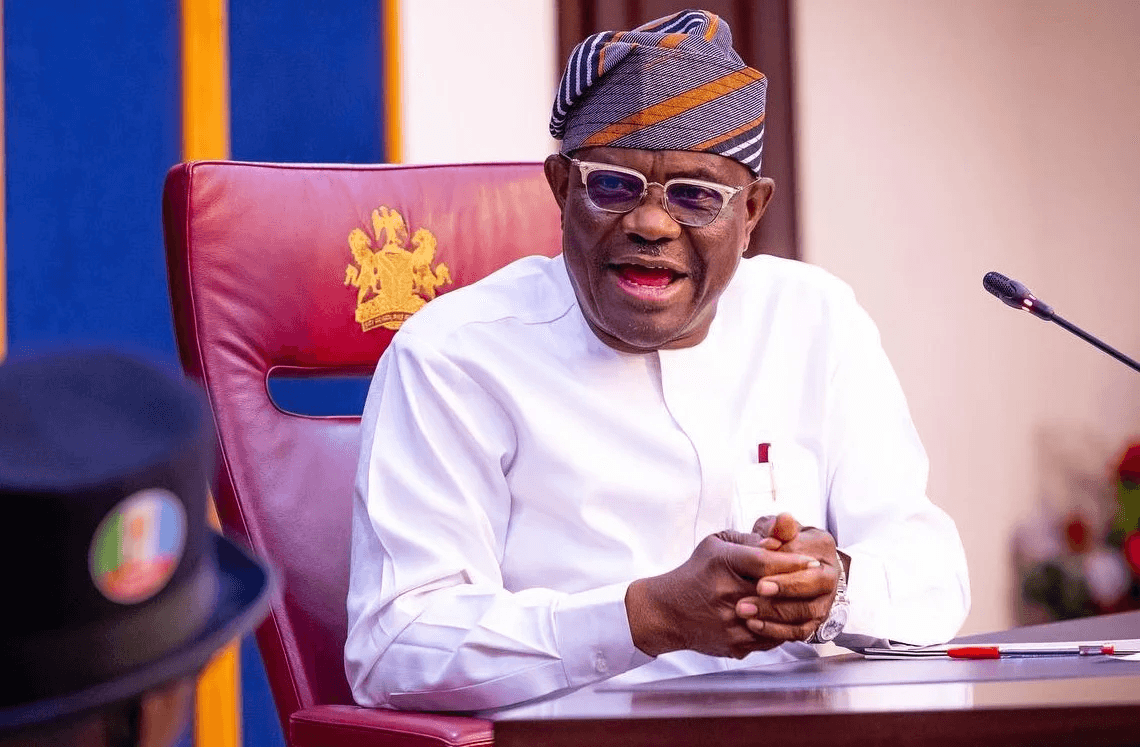
A major crisis within Nigeria's main opposition party, the Peoples Democratic Party (PDP), has escalated after a key leader asserted his faction's control. Nyesom Wike, the Minister of the Federal Capital Territory and a former governor, declared that his group is 'in charge' and will negotiate from a 'position of strength.' This statement directly challenges the party's national leadership and signals a refusal to back down in a long-running internal conflict. The PDP, which governed Nigeria for 16 years until 2015, has been struggling with factional disputes that have weakened its ability to effectively challenge the ruling All Progressives Congress (APC).
To understand this, we need to look at the party's recent history. The PDP lost the presidency in 2015, ending a long period of dominance. Since then, it has faced significant challenges in presenting a united front. The current crisis stems largely from the party's presidential primary in 2022, where Atiku Abubakar emerged as the flagbearer. Wike, who was a leading contender, felt the process was unfair and that promises made to secure his support afterward were not kept. This grievance has festered, leading to the formation of a powerful faction loyal to Wike, often called the 'G-5' governors at the time, who worked against the party's presidential candidate in the 2023 election.
Wike's latest declaration is a clear power play. By stating his group is 'in charge,' he is not merely expressing an opinion but staking a claim to authority within the party's structure. This suggests his faction controls significant resources, influence, and perhaps even the loyalty of a bloc of party members and elected officials. The pledge to negotiate from 'strength' indicates they will not come to the table as supplicants seeking reconciliation but as equals—or superiors—demanding their terms be met. This hardline stance makes any resolution to the party's divisions far more difficult and could lead to a permanent split.
Think of it this way: a family business is arguing over its future direction. One sibling, who manages several profitable branches, stands up and says, 'I run the successful parts of this company, and if you want to talk, you'll talk to me as an equal boss.' That's essentially what Wike has done within the political 'family' of the PDP. He is leveraging the influence and votes he controls to force the national leadership to acknowledge his faction's power. This kind of internal confrontation is common in politics worldwide when there are deep ideological or personal rifts, but it is particularly damaging for an opposition party trying to regain national power.
The implications of this are severe for the PDP's future. A party divided against itself cannot mount a credible challenge in elections. The ongoing feud consumes energy, resources, and public trust. It creates confusion among voters about who truly represents the party and what it stands for. Furthermore, it provides a significant advantage to the ruling APC, which can present itself as stable and unified in contrast. If the PDP cannot resolve this leadership struggle, it risks becoming a permanently weakened opposition, which is unhealthy for Nigeria's democracy. A vibrant democracy requires strong parties that can offer voters clear alternatives.
What happens next is uncertain, but Wike's statement sets the stage for a tense confrontation. The party's national leadership, led by National Chairman Umar Damagum, must now decide how to respond. They could attempt to open negotiations with Wike's faction, but his 'position of strength' demand means those talks would start on his terms. Alternatively, the leadership could move to discipline Wike and his allies, possibly through suspension or expulsion, but this risks formalizing the split and losing a major part of the party's base. There is also the possibility of external intervention from elder statesmen or the party's Board of Trustees to mediate, though Wike's rhetoric suggests he may not be interested in traditional reconciliation.
The stakes extend beyond party politics into governance. Nyesom Wike currently serves as a minister in the cabinet of President Bola Tinubu, who is from the rival APC. This unusual situation—a prominent PDP figure holding a high office in an APC government—highlights the complexity of the crisis. It raises questions about political allegiances and whether the internal PDP conflict is being influenced by, or is influencing, the dynamics of the ruling government. For ordinary Nigerians, this political maneuvering can seem detached from pressing issues like the economy and security, but it directly affects the quality of opposition and accountability they can expect from their leaders.
Ultimately, Wike's declaration is a bold move that deepens the PDP's existential crisis. The party is at a crossroads where it must either find a way to genuinely unify or accept a formal fragmentation. The coming weeks will be critical as both sides gauge their support and decide on their next moves. The next major test will likely be around party congresses or the lead-up to the next electoral cycle, where control of the party machinery is crucial. For now, the message from one of its most powerful figures is clear: his faction holds the cards, and any path forward must go through them.


